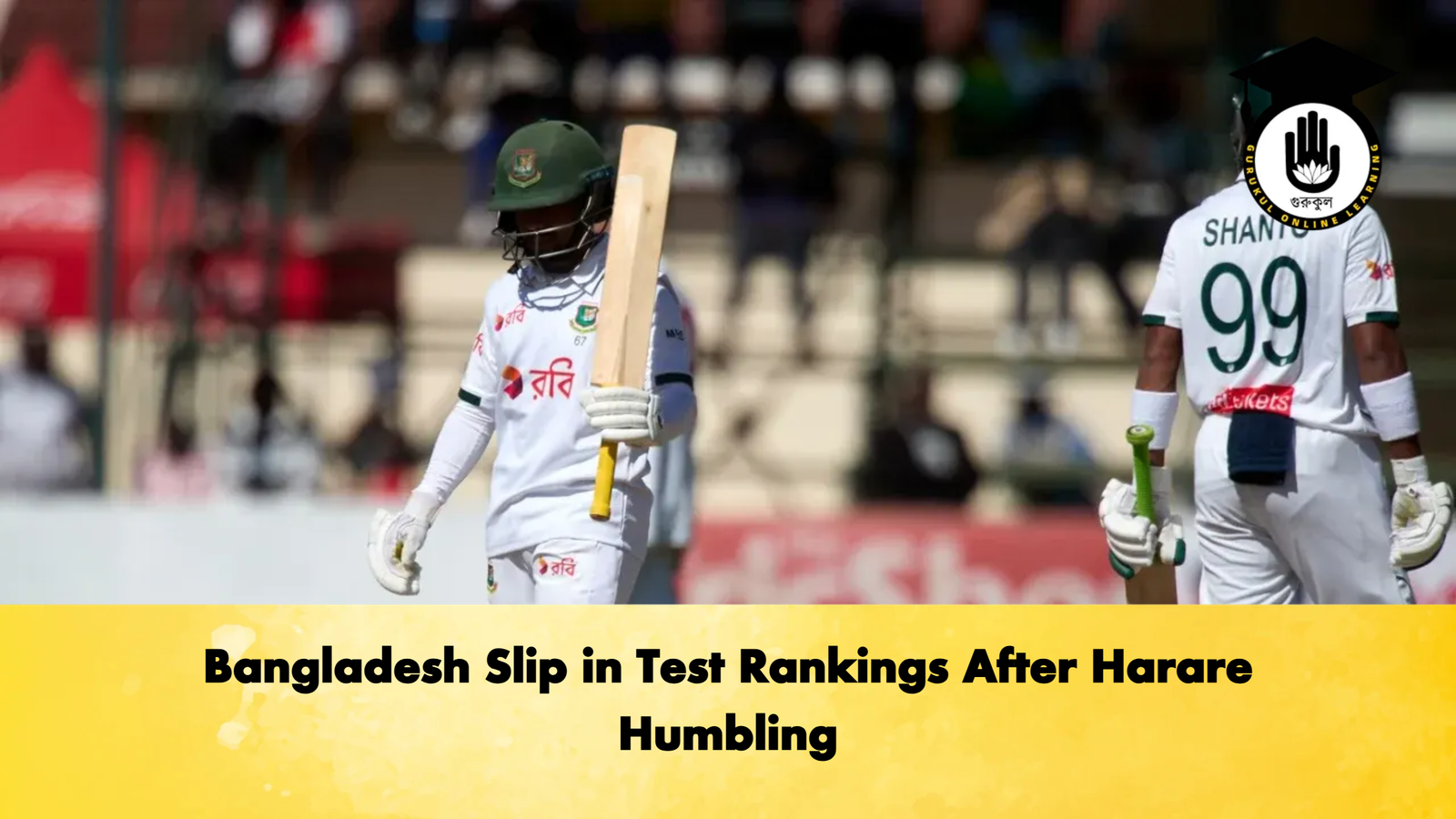
Bangladesh’s heavy defeat to Zimbabwe in the Harare Test has had consequences beyond the result itself, with the loss triggering a drop in the latest International Cricket Council (ICC) Test rankings. Following the innings-and-85-run defeat, Bangladesh have slipped one place to eighth in the standings, falling below Pakistan.
The scale of the defeat also attracted attention in Zimbabwean media. Local newspaper H-Metro ran the headline “BANGLADEAD!”, using a play on words to mock Bangladesh’s dismal display. The headline quickly became a talking point among cricket followers, reflecting the magnitude of Bangladesh’s disappointing performance in Harare.
Bangladesh entered the match as clear favourites. With a squad containing several experienced players and recent positive performances in Test cricket, expectations were that the visitors would have too much quality for Zimbabwe. Those expectations, however, were never realised as Bangladesh struggled from the outset.
The tourists endured a disastrous first innings, managing only 140 runs after a succession of batting failures. Their inability to build partnerships handed Zimbabwe complete control of the contest. Capitalising on Bangladesh’s frailties, the hosts produced an outstanding batting display, amassing 410 in their first innings to establish a commanding lead of 270 runs.
That advantage proved decisive. Bangladesh required a determined response in the second innings but failed to produce one. The top and middle order again collapsed under pressure, with no batter able to play the kind of long, disciplined innings needed to challenge Zimbabwe’s bowlers. Regular wickets prevented any meaningful recovery, and Bangladesh were eventually dismissed for 185.
The defeat, completed inside three days, marked one of Bangladesh’s most disappointing Test performances in recent years. It also represented their first innings defeat against Zimbabwe in approximately 25 years, adding another unwanted statistic to the visitors’ record.
The loss has directly affected Bangladesh’s position in the ICC Test rankings.
| Team | Position Before Match | Position After Match | Rating Before | Rating After |
|---|---|---|---|---|
| Pakistan | 8th | 7th | 75 | 75 |
| Bangladesh | 7th | 8th | 78 | 73 |
Before the Harare Test, Bangladesh held a rating of 78, three points ahead of Pakistan’s 75. The significant defeat reduced Bangladesh’s rating to 73, allowing Pakistan to move above them into seventh place while Bangladesh dropped to eighth.
The setback is particularly disappointing given Bangladesh’s recent progress in the longest format. Only around six weeks earlier, they had completed a memorable 2-0 Test series victory over Pakistan on home soil, a result widely viewed as evidence of the team’s growing maturity and competitiveness. That achievement had fuelled optimism about Bangladesh’s ability to establish themselves more consistently in Test cricket. The comprehensive defeat in Harare has inevitably dented that momentum.
Cricket analysts have identified Bangladesh’s batting as the principal concern. Across both innings, the side failed to produce substantial partnerships or innings capable of absorbing pressure and frustrating Zimbabwe’s bowlers. The batting collapses repeatedly exposed the lower order, leaving little chance of posting competitive totals.
The bowling attack also struggled to apply sustained pressure during Zimbabwe’s first innings. Unable to make regular breakthroughs, Bangladesh allowed the hosts to build a commanding total that effectively decided the contest before the visitors had the opportunity to recover.
With more Test cricket ahead, Bangladesh face the challenge of responding quickly. Restoring consistency with the bat, developing the temperament to construct long innings and delivering disciplined performances in decisive moments will be essential if they are to halt their slide in the rankings and regain confidence in the format. Without significant improvement, the team risks not only further declines in the ICC standings but also greater difficulty competing consistently in Test cricket.