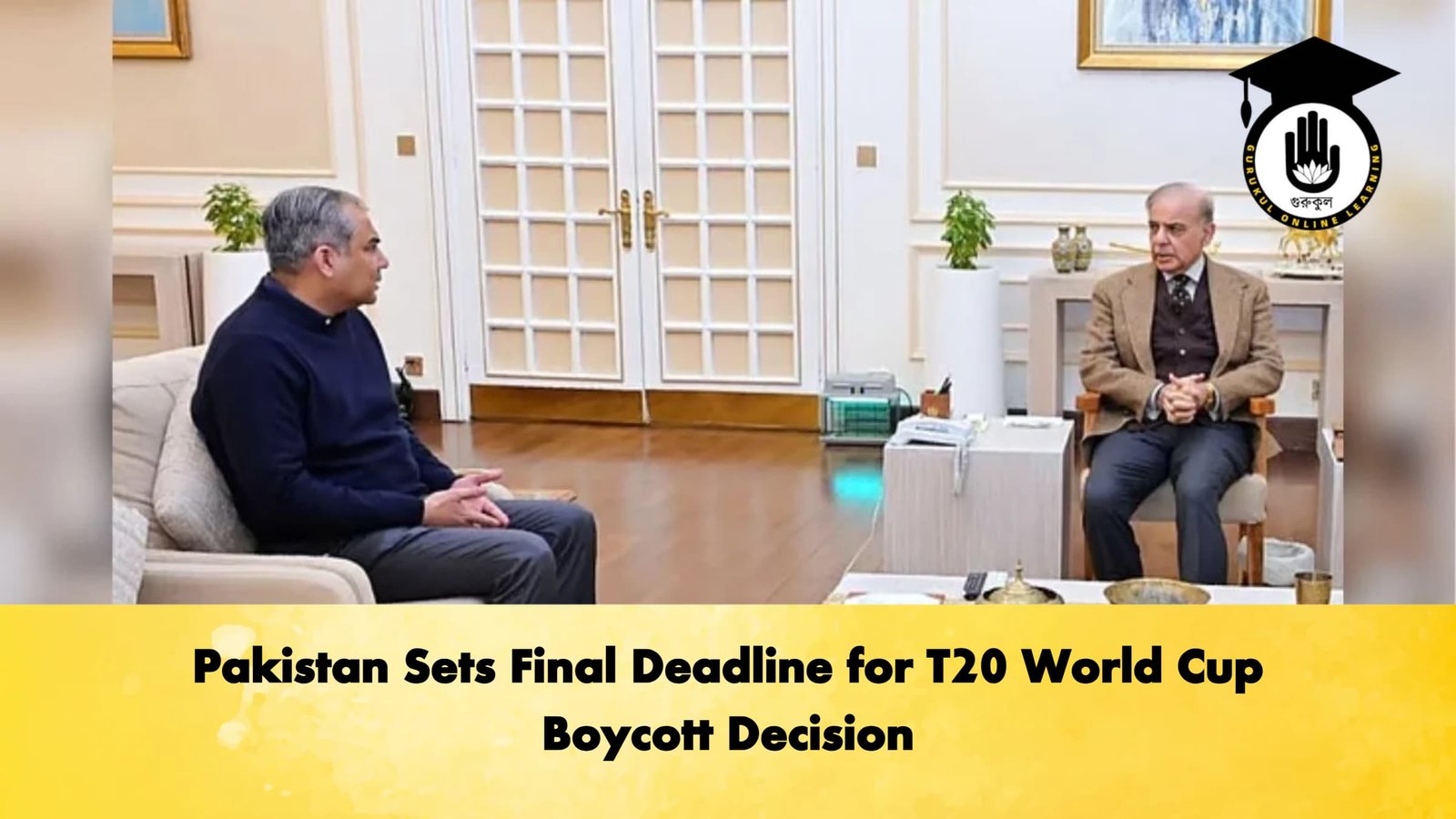
The global cricketing calendar has been plunged into profound uncertainty following a high-stakes meeting in Islamabad between Mohsin Naqvi, Chairman of the Pakistan Cricket Board (PCB), and Prime Minister Shehbaz Sharif. The discussions, held on Monday, focused on Pakistan’s potential withdrawal from the upcoming T20 World Cup in protest against the International Cricket Council’s (ICC) treatment of Bangladesh.
A Conflict of Principles
The dispute follows the ICC’s decision to replace the Bangladesh national team with Scotland for the tournament, scheduled to begin on 7 February 2026. Bangladesh had expressed grave security concerns regarding travelling to the host nation, India, and requested a venue change. When the ICC rejected this plea and subsequently excluded Bangladesh, Naqvi slammed the move as a “double standard,” noting that the ICC had previously accommodated India’s refusal to play in Pakistan with a “Hybrid Model” for the Champions Trophy.
Taking to his official X account after the meeting, Naqvi stated:
“I had a productive meeting with Prime Minister Shehbaz Sharif. I briefed him on the ICC matter, and he has directed that we resolve it while keeping all options on the table. It was agreed that the final decision will be taken either on Friday or next Monday.”
Key Milestones in the T20 World Cup Crisis
| Date | Event | Outcome / Significance |
| 4 Jan 2026 | BCB Security Appeal | Bangladesh requests venue shift from India. |
| 21 Jan 2026 | ICC Board Ruling | ICC mandates original schedule; rejects BCB plea. |
| 24 Jan 2026 | Scotland Substitution | ICC excludes Bangladesh; invites Scotland to Group C. |
| 26 Jan 2026 | Islamabad Summit | PM Sharif briefs PCB; “nuclear options” discussed. |
| 30 Jan–2 Feb | Final Deadline | Decision on total boycott or India-match forfeit. |
The ‘Nuclear Options’ and Financial Stakes
Sources within the PCB suggest that the board is weighing two primary retaliatory measures. The first is a total withdrawal from the tournament, a move that would inflict a massive blow to the ICC’s broadcasting revenue. The second is a targeted boycott of the marquee clash against India, currently scheduled for 15 February in Colombo.
Naqvi reportedly informed the Prime Minister that while a boycott would result in a significant loss of participation fees for Pakistan, the commercial damage to the ICC and the Indian board (BCCI) would be far greater. The India-Pakistan rivalry remains the sport’s most lucrative asset; its cancellation would likely trigger legal and financial chaos for tournament sponsors.
Diplomatic Brinkmanship
As the 7 February start date approaches, the pressure on the ICC to negotiate is mounting. Pakistan’s stance is being framed not merely as a sporting decision, but as a matter of diplomatic solidarity with Bangladesh. However, reports also suggest that the PCB may be using this leverage to force a more permanent “neutral venue” policy for all future bilateral matches held within the region.
With the final verdict expected no later than Monday, 2 February, the cricketing world remains on tenterhooks. Should Pakistan proceed with a boycott, the T20 World Cup will lose one of its most dominant competitors and its most celebrated fixture, forever altering the landscape of international cricket governance.