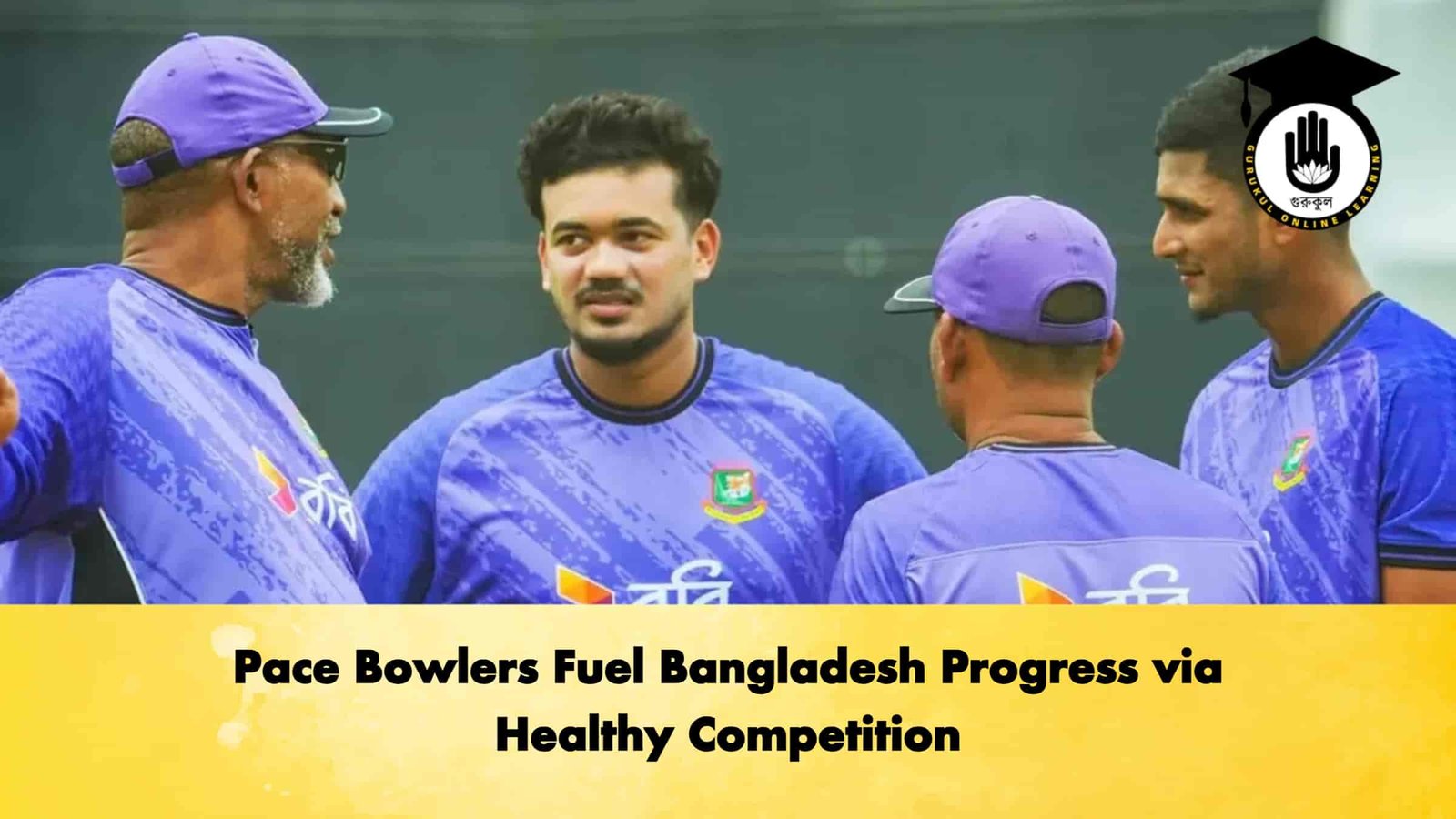
The fast bowling department of the Bangladesh national cricket team has undergone a notable transformation, displaying consistent development over the past few years. National all-rounder Mohammad Saifuddin has identified the existing “healthy competition” within the pace unit as a primary driver of this recent success, asserting that rising internal rivalry directly correlates with the team’s upward performance trajectory.
In an interview with local media representatives, Saifuddin noted that the progress achieved by the country’s fast bowlers over the last two to three years is undeniable. He observed that pacers are currently driving the team’s Test match victories, a sharp contrast to previous years when Bangladesh’s red-ball campaigns were defined by prolonged struggles on the field.
Format Performance of the Current Pace Attack
The current pool of fast bowlers consists of multiple distinct athletes who consistently deliver impactful performances across all three formats of international cricket, as structured below:
| Player Name | Primary Role | Formats Played | Core Functional Value |
| Taskin Ahmed | Right-arm fast-medium | Test, ODI, T20I | Delivers vital initial breakthroughs and veteran leadership. |
| Nahid Rana | Right-arm express fast | Test, ODI, T20I | Generates significant high velocity and aggressive bounce. |
| Mohammad Saifuddin | Right-arm fast-medium | ODI, T20I | Provides lower-order batting depth and tactical variations. |
Operational Synergy and Technical Advancement
Saifuddin commended the collective contributions of the current fast bowling group, specifically naming senior bowler Taskin Ahmed and newcomer Nahid Rana. He stated that irrespective of the format—be it Test matches, One Day Internationals (ODIs), or Twenty20 Internationals (T20Is)—the selected pacers are meeting their performance benchmarks.
According to the all-rounder, observing peers commit to rigorous training regimens and physical preparation naturally increases the workload demands across the entire squad. This environment forces individual players to enhance their self-motivation, expand their training routines, and continuously seek technical improvement. Saifuddin concluded that this competitive operational model serves as a very promising sign for the national cricket infrastructure, reiterating that maintaining a high level of healthy rivalry within the selection pool ensures the continuous refinement of the national team.