Following India’s World Cup triumph, women’s cricket has experienced a remarkable revival across the country. Players such as Harmanpreet Kaur, Smriti Mandhana, and Richa Ghosh are being celebrated nationwide, receiving honour after honour. Yet, one may wonder how women’s cricket in India actually began and what the early days looked like. Veteran sports journalist Raju Mukhopadhyay explores this in depth.
Raju recounts, “I spent the past few days in North Bengal. While in Siliguri, I witnessed world champion Richa Ghosh return to her hometown. The excitement and celebrations surrounding her were immense. Seeing it was truly heartening. For the first time, a player from Bengal brought home cricketing gold from a World Cup. Previously, no male or female cricketer from Bengal had achieved this at the senior level. It was an extraordinary feat. Richa’s name will remain etched in golden letters in the history of Indian and Bengali cricket.”
He reflects further on Richa’s journey: “The girl from North Bengal, from Siliguri, fought relentlessly to reach this level. She utilised every opportunity and became a world champion. I especially wish to congratulate her parents and her coaches, who have consistently encouraged her. Richa has elevated Bengali cricket to a whole new level.”
Raju explains the significance of her role: “When a player wins matches by scoring heavily off fewer balls, their impact is immense. That is exactly what Richa repeatedly did in the World Cup. She consistently scored quickly, finishing matches – in cricketing terms, a finisher. This is similar to how Michael Bevan was regarded in Australia or MS Dhoni in India. In a country like India, where numbers often dominate perception, her ability to score efficiently under pressure is extraordinary. Many cricketers around the world cannot do what she has achieved, and most likely never will.”
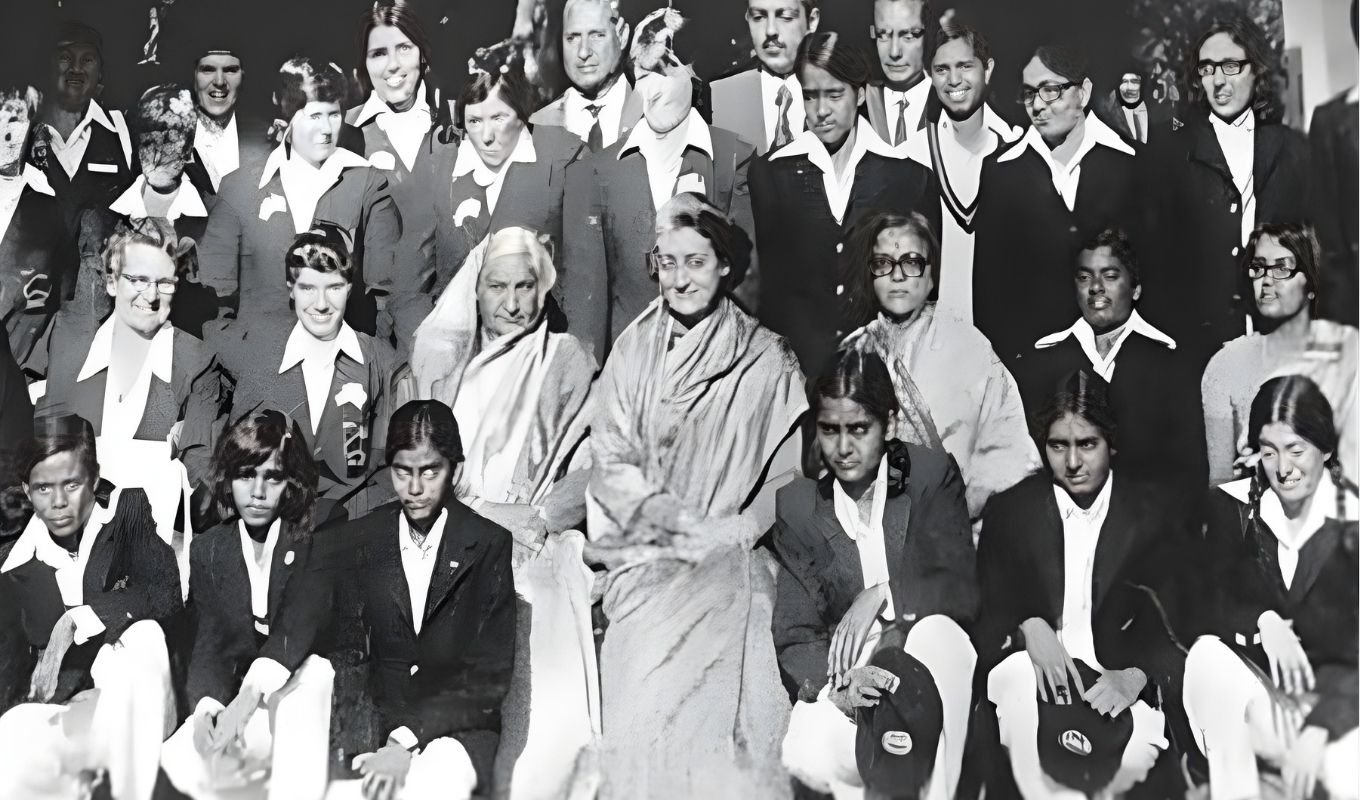
Raju then highlights the roots of women’s cricket in India: “The first women’s cricket association, the Indian Women’s Cricket Association (IWCA), was established in 1971 in Lucknow, not in Kolkata, Delhi, Mumbai, or Chennai. Interestingly, without Mrs Indira Gandhi’s blessings, IWCA may never have been founded. At that time, following the partition of Pakistan and the birth of Bangladesh, she strongly encouraged women to advance in every field. Her vision laid the foundation for modern Indian women’s cricket.”
He also credits the pioneering efforts of Bengal: “Seeing Mrs Gandhi’s initiative, Siddharth Shankar Ray insisted that women’s cricket be promoted in the CAB, insisting it receive proper attention. The officials were astonished; the idea of women playing cricket seemed almost unimaginable. At the Kalighat Club, Natu Kole, a noble and selfless individual, offered the facilities. Women trained in the mornings, while the men’s team trained in the afternoons. Pradyut Mitra was appointed coach. His coaching was methodical and extensive, lasting hours each morning.”
The results of this training were remarkable. Players like Shrirupa Basu, Lopamudra Bhattacharya, Sandhya Majumdar, and Sharmila Chakraborty emerged. Sandhya Majumdar excelled with the bat, Sharmila Chakraborty was a formidable left-arm spinner, and Shrirupa Basu captained the team. From South India came Shanta Rangaswamy and from Mumbai, Diana Edulji. Together, Sharmila, Shanta, and Diana became the triumvirate of Indian women’s cricket, shaping the sport nationally and inspiring future generations.
In short, according to Raju Mukhopadhyay, Indian women’s cricket literally learned to walk – and later run – with the guidance of Mrs Gandhi and the dedication of early Bengali pioneers. This foundation continues to underpin the sport’s success and its international achievements today.