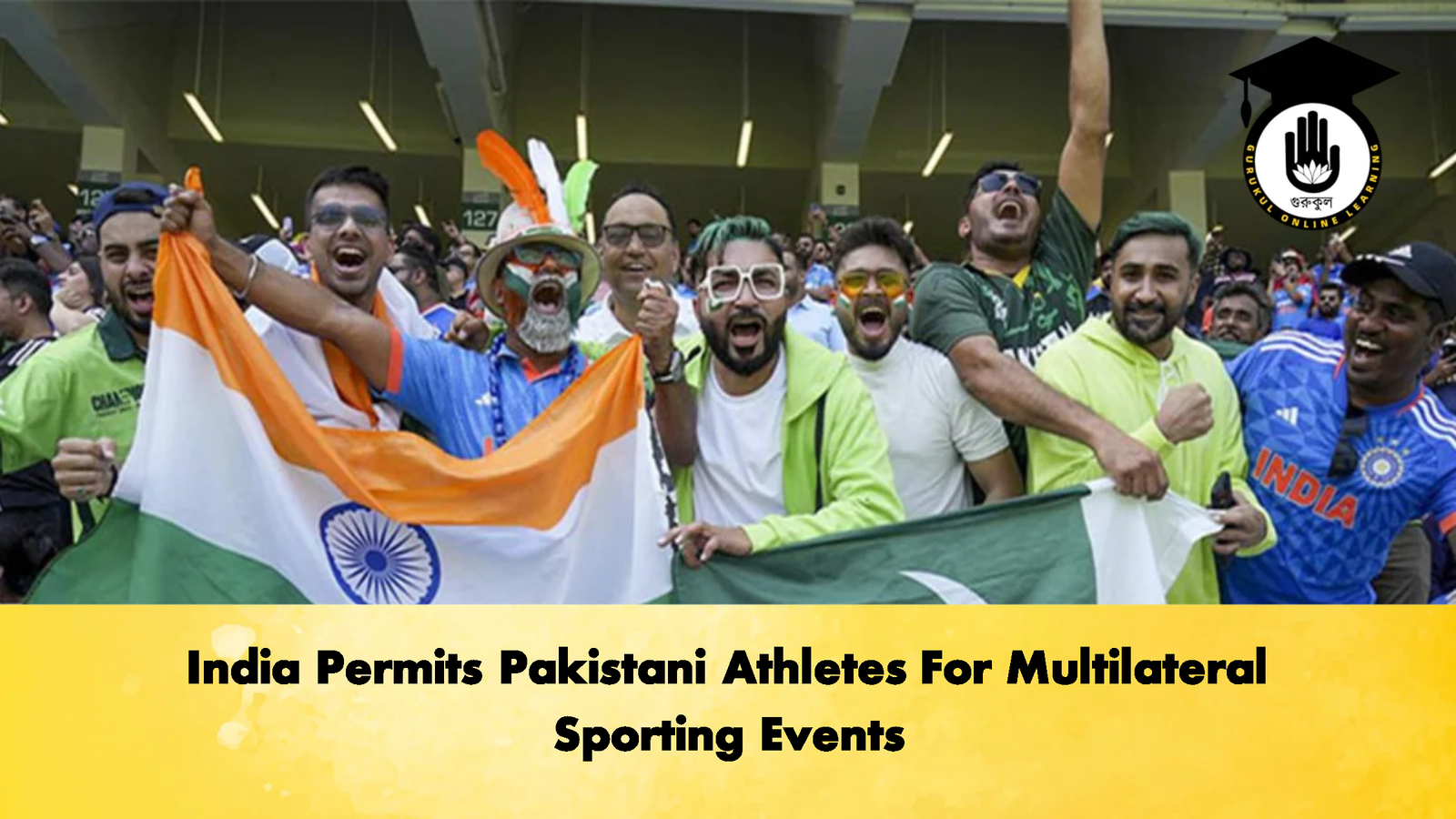
The Indian Ministry of Youth Affairs and Sports has formally articulated its contemporary stance regarding the participation of Pakistani athletes in sporting events hosted within its borders. While the prevailing geopolitical climate continues to necessitate a suspension of bilateral sporting engagements, the Ministry has confirmed that the doors remain open for Pakistani competitors to participate in multilateral and international tournaments staged in India.
This clarification serves to distinguish between exclusive head-to-head series and broader competitive frameworks, ensuring that India remains compliant with the mandates of global sporting governing bodies. The decision underscores a deliberate diplomatic balance between maintaining national security protocols and upholding international sporting obligations.
Strategic Adherence to International Standards
According to reports disseminated by Reuters, the Indian sports ministry emphasised its commitment to the established protocols of international federations. In an official statement, the ministry noted:
“In the case of international and multinational events organised in India or abroad, we prioritise the prevailing policies of international sports organisations as well as the interests of our own athletes.”
This policy ensures that India does not jeopardise its standing within the global sporting community. By allowing Pakistani participation in multi-nation events—such as World Cups or Continental Championships—India avoids potential sanctions from organisations like the International Olympic Committee (IOC) or the International Cricket Council (ICC). These bodies typically require host nations to guarantee entry for all qualified participants as a condition of hosting. Adhering to these norms is viewed as essential for India’s continued integration into the top tier of global sports administration and its reputation as a neutral host for world-class competition.
Facilitation of Visas and Administrative Support
To support this commitment, the Indian government has indicated a streamlining of administrative hurdles that have historically complicated cross-border travel. The Ministry has announced that the visa application process for foreign athletes and accompanying officials will be simplified. This move is designed to mitigate the historical difficulties faced by Pakistani delegations when attempting to enter India for competition. Key updates to the administrative framework include:
Expedited Visa Issuance: Reducing the processing time for athletes participating in sanctioned multinational events to ensure squads are finalised without delay.
Multiple-Entry Visas: International sports officials will be eligible for multiple-entry visas to facilitate the logistical demands of tournament oversight, technical inspections, and pre-event briefings.
Safety Guarantees: A formal reiteration of the commitment to provide a secure environment for all visiting delegations, regardless of their country of origin, ensuring that sport remains insulated from external pressures.
Ambitions for Global Hosting Rights
The refinement of these policies is closely linked to India’s broader ambition to become a premier global destination for high-profile sporting events. The government is currently laying the groundwork for several significant bids over the next decade. Specifically, India is preparing to host the 2030 Commonwealth Games, a move that requires a clear and inclusive entry policy for all member nations, including those with whom India shares complex histories.
Furthermore, a comprehensive proposal has been developed to host the 2036 Olympic Games and the 2038 Asian Games, with the city of Ahmedabad positioned as the primary venue hub. Demonstrating a consistent and non-discriminatory visa policy is a non-negotiable prerequisite for any nation seeking to secure the hosting rights for the Olympic Games. The IOC Charter mandates equal treatment for all National Olympic Committees; consequently, any blanket ban on a specific nationality could lead to the revocation of hosting rights or the loss of Olympic recognition for events held in the country.
The Persistent Bilateral Deadlock
Despite the newfound openness toward multilateral competitions, the prohibition on bilateral series—particularly in cricket—remains absolute. This freeze is a direct consequence of the long-standing and volatile diplomatic relations between the two nuclear-armed neighbours. The absence of bilateral cricket since the 2012–13 season highlights the depth of this sporting schism.
Relations reached a nadir last year following a significant military confrontation that raised international concerns regarding the potential for a full-scale armed conflict. Consequently, the Indian government maintains that “normal” sporting relations, which involve home-and-away series between the two nations, cannot resume until there is a fundamental shift in the security and diplomatic landscape.
While Pakistani cricketers and athletes may travel to India as part of a larger global contingent for events such as a World Cup or an Asian Championship, the prospect of a standalone India-Pakistan series remains off the table for the foreseeable future. This maintains a status quo that has persisted for over a decade, reflecting the reality that in this region, sport remains inextricably linked to political and security developments. The Ministry’s announcement confirms that while India will fulfil its duties as a global host, it will not yet resume private sporting relations with its neighbour.