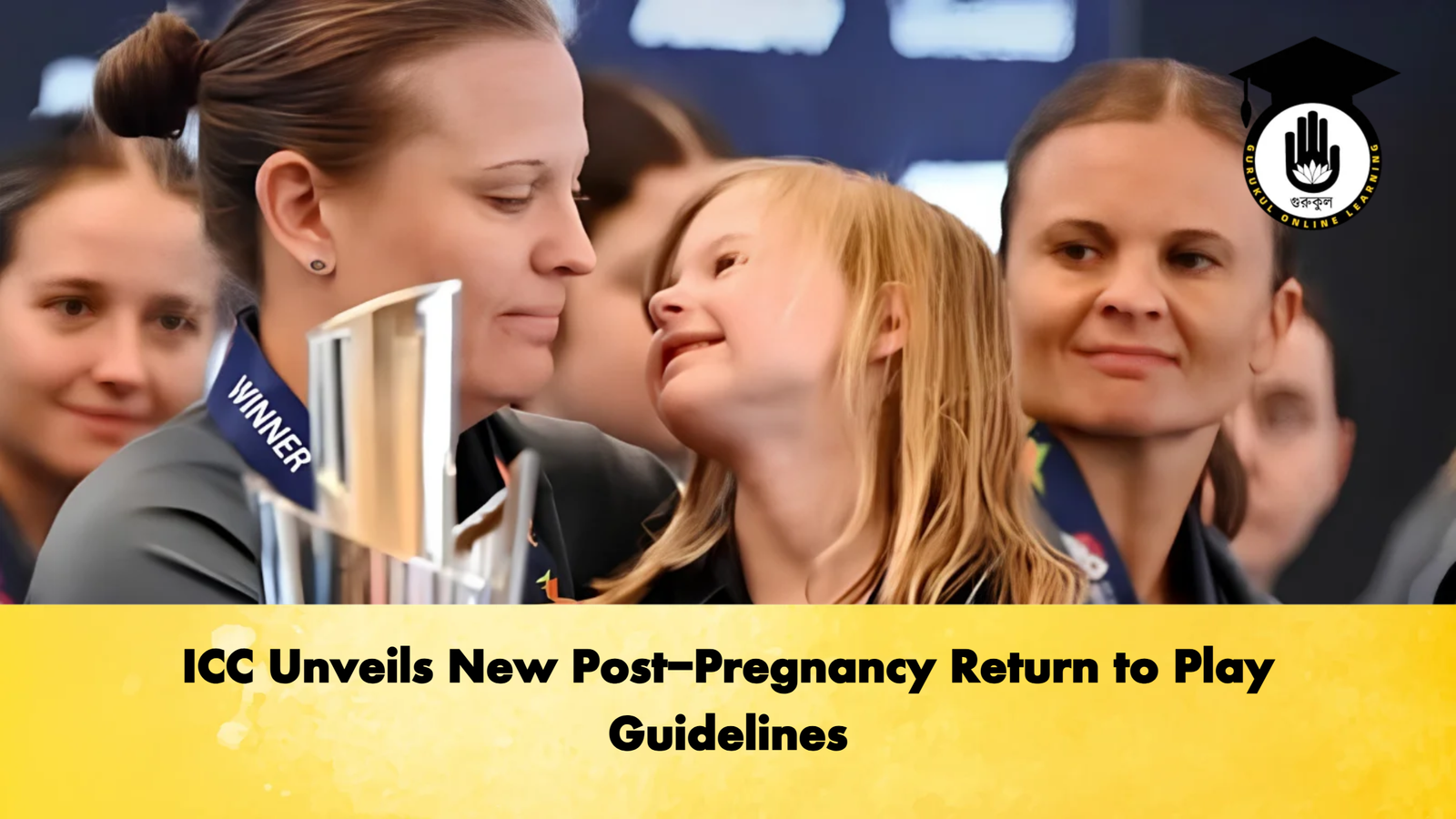
The International Cricket Council (ICC) has launched a comprehensive “Return to Play Post-Pregnancy Guideline” designed to safely manage the reintegration of female cricketers into the sport after childbirth. This newly published framework offers structural support for players, member boards, medical professionals, and coaches globally. It focuses heavily on balancing the physical recovery and psychological well-being of elite athletes as they transition back into highly competitive environments.
With women’s cricket advancing rapidly as a viable professional career, a growing number of players face the decision to start families during their peak playing years. The governing body designed these measures to ensure that maternity no longer marks the premature end of an athlete’s professional journey.
The initiative aligns with the ICC’s strategic prioritisation of player welfare, where women’s health and safety remain one of six core pillars. This builds upon the foundations laid by the “100% Cricket” campaign, an ICC programme aimed at raising awareness about female athlete health and fostering transparent dialogue regarding previously overlooked medical challenges.
The ‘6 Rs’ Structured Pathway
Central to the new guidelines is the “6 Rs” model, a phased, evidence-based pathway designed to mitigate injury risks and ensure a sustainable return to competitive fitness. The stages comprise:
Ready: Prioritising immediate postpartum recovery, pelvic floor rehabilitation, and adequate rest.
Review: Conducting thorough medical screenings and psychological assessments by qualified specialists.
Restore: Rebuilding basic functional strength, mobility, and fundamental physical conditioning.
Recondition: Introducing cricket-specific conditioning drills, testing physiological responses to increased workloads.
Return: Resuming team training sessions, net practices, and local competitive matches.
Refine: Optimising performance levels at the international crease whilst maintaining strict, ongoing medical monitoring.
Implementation and Logistical Support
Developed under the leadership of Dr Philippa Inge, a member of the ICC Medical Advisory Committee and team doctor for the Australian women’s squad, the guidelines look beyond physical training. The framework mandates that member boards provide adaptable training environments. This includes the provision of childcare advice, secure crèche facilities at venues, designated breastfeeding areas, and essential travel assistance for infants and primary carers during bilateral tours.
Dr Inge emphasised that the ICC intends to send a clear message: motherhood and a successful international cricket career are not mutually exclusive. She noted that the framework is highly adaptable, allowing individual member countries to tailor the guidelines according to localized resources and the unique circumstances of each family.
Player Perspectives and Institutional Support
The policy has received widespread praise from active players, including West Indies leg-spinner Afy Fletcher. Having given birth in 2021, Fletcher successfully navigated her own return to international cricket and is set to feature in the upcoming ICC Women’s Cricket World Cup 2026.
Fletcher remarked that the formalisation of these guidelines provides crucial protection and clarity for female athletes. Reflecting on her personal journey, she stated that whilst physical recuperation posed distinct challenges, the emotional strain of leaving her child to return to the field was far more demanding. She credited her child as her primary motivation and hailed the ICC’s move as a vital step toward helping players balance family life with international duties.
ICC Chairman Jay Shah reiterated the governing body’s commitment to sustainable development within the sport, asserting that elite athletes require robust support structures at every stage of their lives. Shah stated that no female cricketer should ever be forced to choose between the joy of motherhood and representing her country. The ICC expects this framework to foster a more inclusive, supportive global cricket culture, ensuring the retention of world-class talent and establishing a clear, institutionalised pathway for future generations.