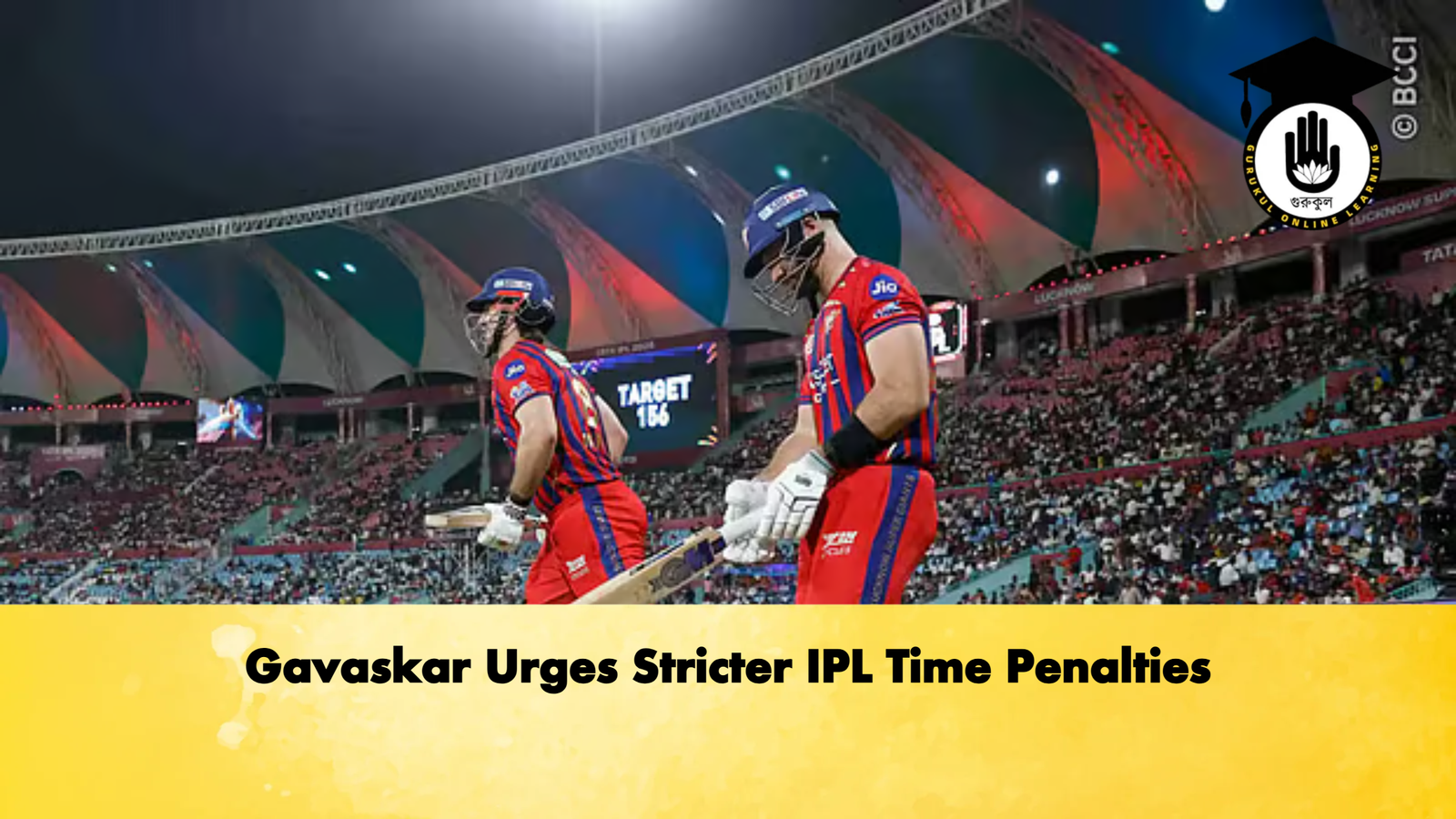
The popularity of Twenty20 cricket has largely been built on its promise of delivering results within a relatively short timeframe compared with Test and One-Day formats. However, the ongoing Indian Premier League (IPL) season has raised concerns about this fundamental characteristic, as matches are increasingly exceeding their expected duration.
In the current edition of the IPL, no match has been completed within the standard three-and-a-half-hour window. A notable example involved a fixture between Mumbai and Bengaluru, which extended to approximately 4 hours and 22 minutes. This prolonged duration occurred despite the absence of a Super Over or any extraordinary interruptions that would typically justify such an extension.
The recurring failure to conclude matches within the stipulated time has drawn criticism from former India captain Sunil Gavaskar. Writing in his column, he argued that the existing penalties for slow over rates—primarily financial fines—are insufficient to address the issue. According to Gavaskar, the substantial earnings of modern cricketers reduce the deterrent effect of monetary sanctions, as such penalties do not significantly impact players or teams.
He suggested that more stringent measures are required, including penalties that directly influence the outcome of matches. Specifically, he proposed the introduction of run deductions or similar sanctions that could alter results, thereby compelling teams to maintain over-rate discipline.
Gavaskar also highlighted concerns regarding what he described as a degree of “laxity” and “unprofessionalism” in time management within the IPL, despite its status as one of the world’s leading franchise tournaments. He emphasised the need for stricter control over on-field access, noting that the frequent entry of reserve players to deliver drinks or messages disrupts the flow of the game.
He wrote that such practices should be curtailed, suggesting that only designated personnel—such as coaching staff and authorised support members—should be allowed onto the field during official strategic timeouts. To reinforce this point, he cited the late commentator Richie Benaud, who had long maintained that the field of play should be reserved exclusively for players and umpires, as unnecessary movement can slow the pace of the match.
In addition to these recommendations, Gavaskar proposed a reduction in the time allowed for a new batter to take the field following a dismissal. Under current regulations, incoming batters are given two minutes to be ready. He argued that, given that players now wait in dugouts close to the boundary, this interval could reasonably be reduced to one minute without compromising preparedness.
At present, teams failing to complete their overs within the allocated time are subject to fines. However, Gavaskar reiterated that such measures have limited effectiveness. “Until the penalty is something that can impact the result of the game, it will not be effective,” he stated.
He further pointed to the existing in-match sanction whereby teams falling behind the over rate are required to reduce the number of fielders permitted outside the 30-yard circle in the final over. This rule, he observed, creates immediate pressure because it can directly affect the outcome. Extending this principle, he argued that run or points penalties would discourage time-wasting between overs and ensure adherence to match schedules.
A summary of the current regulations and Gavaskar’s proposed changes is presented below:
| Aspect | Current Regulation | Proposed Change |
|---|---|---|
| Slow over-rate penalty | Financial fines | Run or points deduction |
| On-field access | Multiple personnel allowed | Restricted to authorised staff |
| Time for new batter | 2 minutes | 1 minute |
| Fielding restriction penalty | Fewer boundary fielders in final over | Retain and add run penalties |
Gavaskar concluded that only penalties with tangible competitive consequences would ensure that teams prioritise timely completion of their overs and restore the intended pace of Twenty20 cricket.