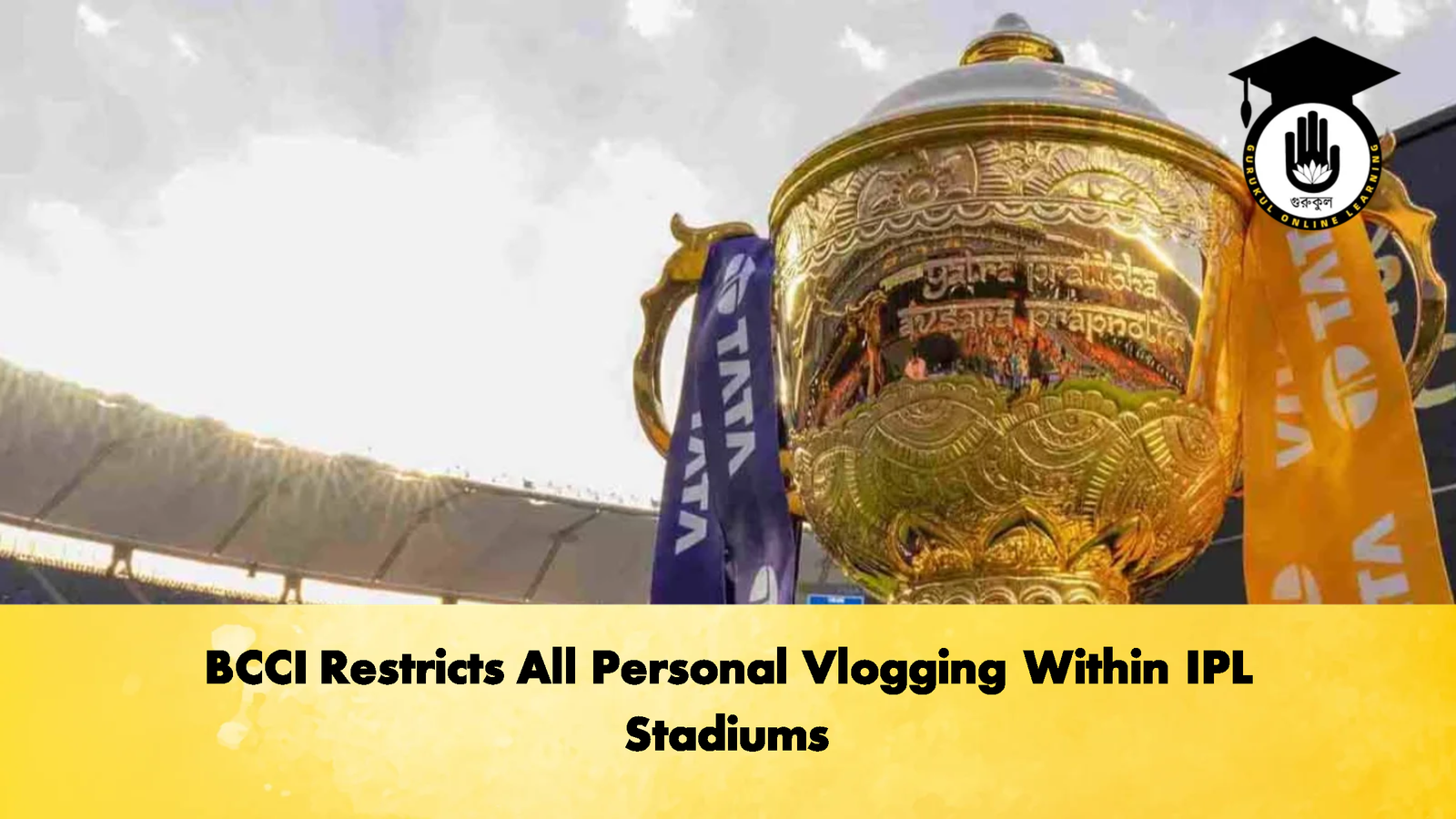
The Board of Control for Cricket in India (BCCI) has implemented a rigorous new protocol to govern digital content creation during the ongoing Indian Premier League (IPL) season. In an effort to uphold the integrity of the tournament and safeguard the interests of official broadcasting partners, the governing body has issued an absolute prohibition against players, match officials, and support staff recording or distributing video content from within stadium boundaries on match days.
Fortifying Security and Anti-Corruption Measures
According to detailed reports by NDTV and The Times of India, the BCCI’s “zero-tolerance” stance is motivated primarily by the need to maintain the sanctity of the Players and Match Officials Area (PMOA). The Board has expressed concerns that unregulated vlogging and video capture could inadvertently reveal tactical discussions or create security lapses that might be exploited for corrupt activities.
The directive is far-reaching, encompassing not only the athletes but also commentators, production staff, and even the family members of those participating in the tournament. Individuals found in breach of these guidelines are liable to receive formal legal notices and face severe disciplinary sanctions.
Key Incidents Prompting the Regulatory Shift
The formalisation of these restrictions follows several high-profile incidents where personal content creation intersected with professional boundaries:
Arshdeep Singh: The Punjab Kings pace bowler was recently ordered by the Board to discontinue his personal social media vlogging immediately. This specific intervention signaled a shift in the Board’s tolerance toward independent digital activities by contracted players.
Former International Representative: During a recent high-stakes fixture, a former international cricketer—utilising his access as a commentator—was seen recording footage for his personal YouTube channel near the team dugout. The BCCI Anti-Corruption Unit (ACU) intervened on-site to terminate the recording. Reports suggest the individual is now subject to potential legal action.
Broadcasting Personnel: A number of broadcasters and match officials have reportedly been reprimanded for violating the “no-video” policy. The Board has clarified that any individual wearing the official IPL or BCCI insignia is strictly forbidden from capturing personal footage.
Addressing the Proliferation of “Reel Culture”
The BCCI has noted its increasing apprehension regarding the pervasive “Reel culture” and a perceived over-reliance on social media platforms by the current generation of cricketers. This policy serves as a corrective measure to ensure that off-field conduct remains commensurate with the professional standards of the league.
This move also follows recent public controversies, including a social media clip involving Yuzvendra Chahal on a flight, which led the Board to conclude that tighter controls over player-recorded content are necessary to protect the league’s reputation. Furthermore, family members of the players have been formally requested to refrain from uploading any “behind-the-scenes” media from the stadium premises.
Exceptions for Official Franchise Media
While the restriction is comprehensive for individuals, it does not apply to the accredited content teams of the various IPL franchises. These professional units remain the only entities authorised to operate cameras within the sensitive zones of the stadium. However, their output is subject to a stringent vetting process to ensure compliance with the league’s security, tactical secrecy, and commercial broadcasting agreements.
| Restricted Group | Specific Enforcement Measure |
| Players and Officials | Total ban on personal vlogging inside the stadium |
| Sensitive Zones | Dugouts and PMOA declared strictly off-limits to personal cameras |
| Family Members | Prohibition on posting match-day media from the ground |
| Consequences | Legal notices, fines, and formal administrative warnings |
Through the implementation of these protocols, the BCCI intends to ensure that the IPL remains a secure environment for elite professional sport, free from the potential risks associated with unauthorised digital entrepreneurship. By centralising content through official channels, the Board remains focused on the primary objective of maintaining the integrity and exclusivity of the world’s most prominent domestic cricket league.