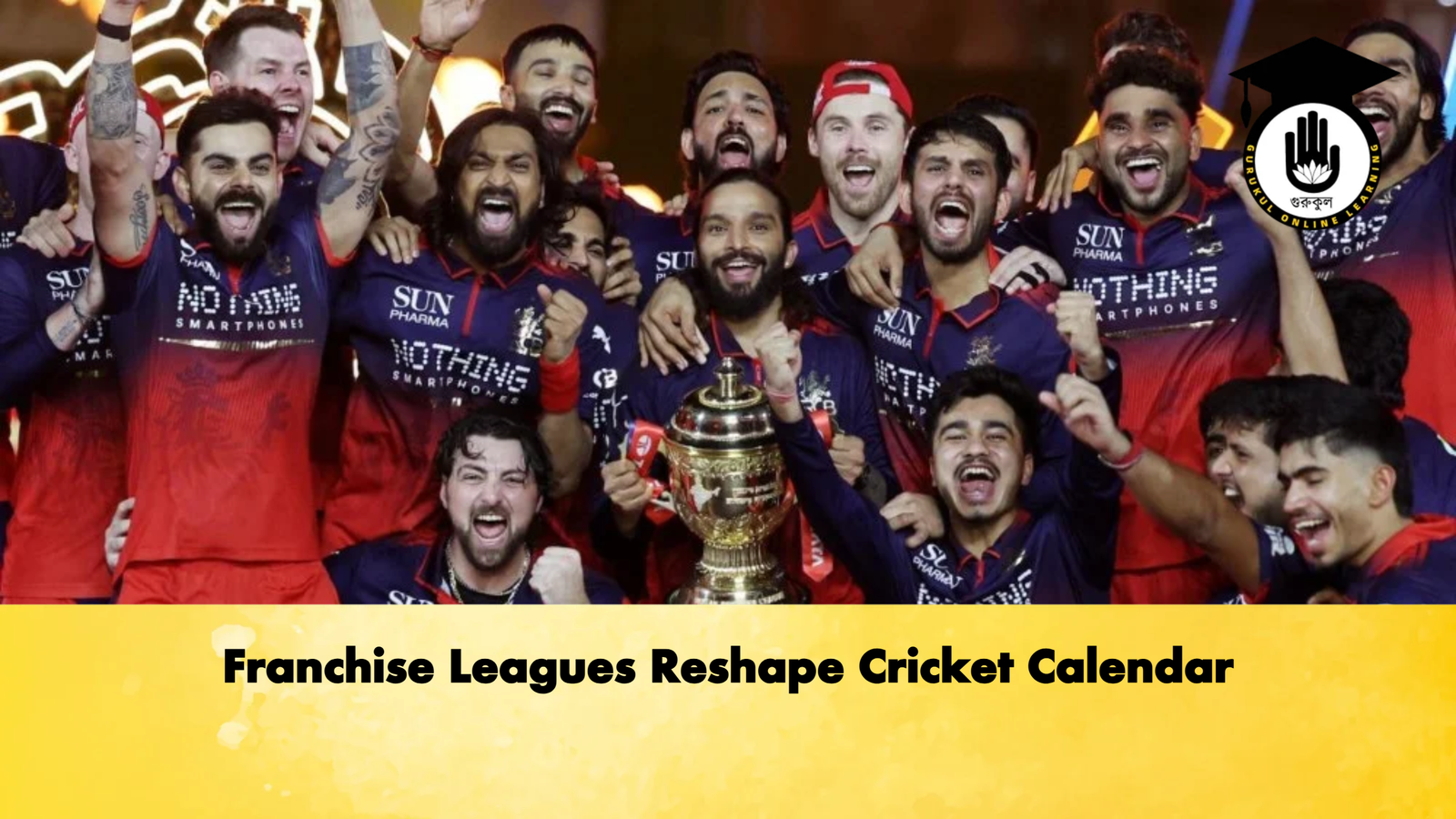
The rapid expansion of franchise-based Twenty20 leagues across world cricket is placing increasing strain on the international structure of the sport. With major competitions such as India’s flagship franchise league and Bangladesh’s popular domestic tournament continuing to grow in scale, alongside the emergence of new leagues in several other countries, the task of scheduling international series, bilateral tours and global tournaments has become significantly more complex than in previous years.
Each season, the addition of new franchise events is steadily reducing the available windows in the global cricket calendar. As a result, finding suitable periods for Test matches, One Day Internationals and bilateral series is becoming increasingly difficult. The sport’s global governing body, the International Cricket Council (ICC), regularly receives requests from member boards seeking adjustments and coordination of schedules, yet achieving alignment between competing domestic leagues and international commitments has become progressively more challenging.
A key concern is the expansion plans of the Indian franchise league, alongside the growing number of matches and participating teams in other domestic competitions. This has intensified pressure on the international calendar and directly affected the availability of leading players for national duty. In several instances, international series have coincided with franchise tournaments, creating uncertainty over player selection and weakening squad stability.
Financial considerations are also reshaping player priorities. Franchise leagues often offer significantly higher earnings compared to international fixtures, leading many cricketers—particularly from nations such as the West Indies, Sri Lanka, and New Zealand—to prioritise league participation. In some cases, players have opted for early retirement from international cricket altogether, a trend that has raised concerns about the long-term competitiveness and depth of national sides.
In response to these challenges, the ICC has established a special committee tasked with examining the balance between international and franchise cricket. The committee is expected to explore long-term scheduling frameworks aimed at ensuring both formats can coexist without undermining each other. The objective is to create a more structured global calendar that reduces conflict between domestic leagues and international series.
Current Situation Overview
| Issue Area | Current Trend | Impact |
|---|---|---|
| Expansion of leagues | New franchise tournaments added annually | Reduced space in international calendar |
| Player availability | Increasing participation in leagues | Uncertainty in national team selection |
| Scheduling conflicts | Overlapping domestic and international fixtures | Difficulty organising bilateral series |
| Financial incentives | Higher earnings in franchise cricket | Declining focus on international matches |
| Administrative response | ICC special committee formed | Efforts underway for long-term solution |
Experts argue that the continued rise of franchise cricket is likely to accelerate further in the coming years. They suggest that without a fundamental restructuring of the global cricket calendar, the sport may face ongoing imbalance between its traditional international format and the commercially driven league system. The challenge, they note, is no longer limited to scheduling alone, but extends to preserving the overall integrity and sustainability of international cricket itself.