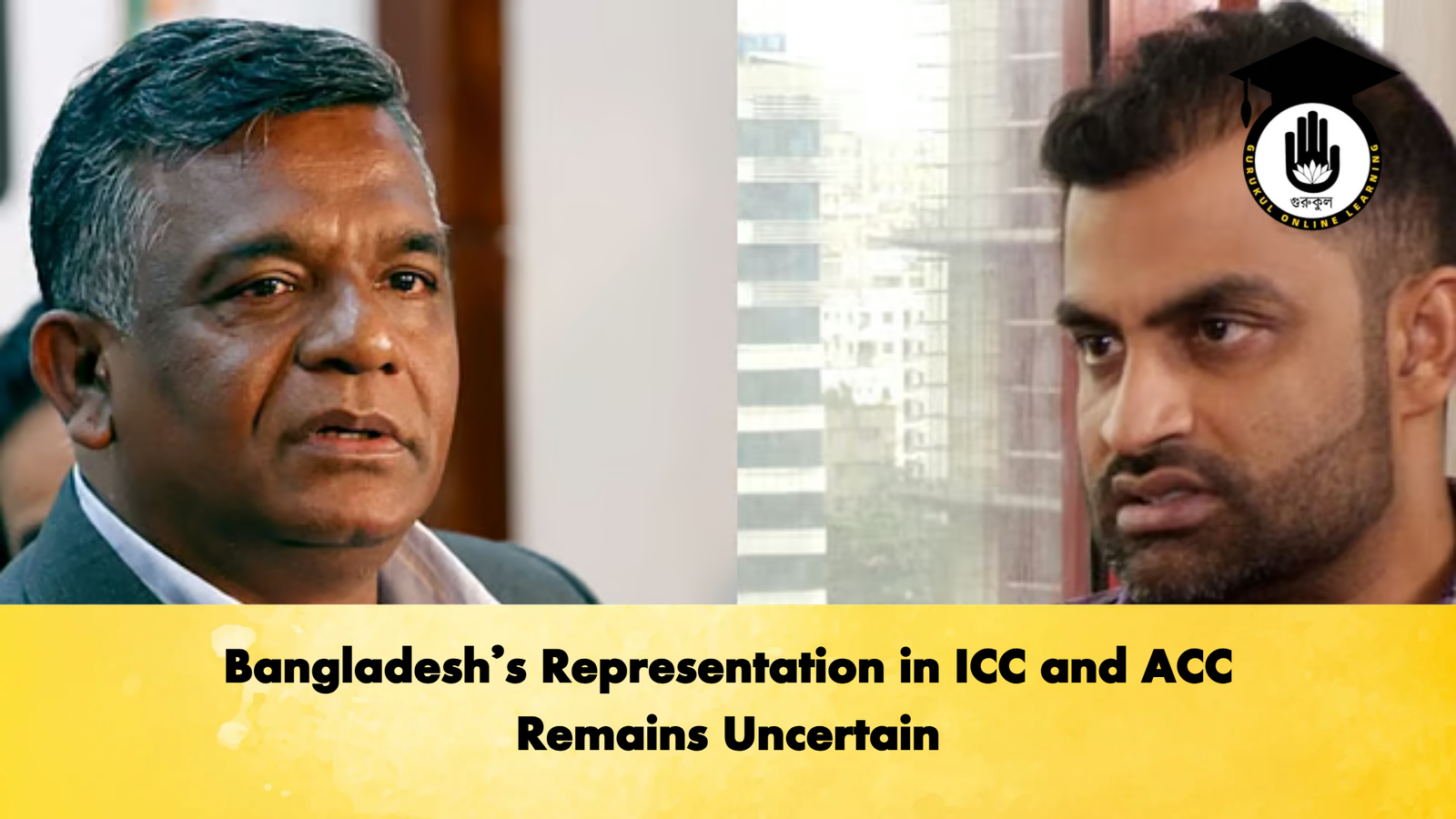
Recent developments within the Bangladesh Cricket Board (BCB) have sparked significant discourse across social media regarding the nation’s official representation in international cricket governance. The central query remains: who is the legitimate representative for Bangladesh at the International Cricket Council (ICC) and the Asian Cricket Council (ACC)—Tamim Iqbal or Aminul Islam?
Despite a leadership transition at the BCB occurring three years ago, the official websites of both the ICC and the ACC, the latter currently chaired by Mohsin Naqvi, continue to list former BCB President Aminul Islam as the representative on their respective Executive Boards.
The Protocol of Representation
Conventionally, the head of a member nation’s cricket board serves as its representative on the Board of Directors for both the ICC and ACC. During the inaugural meeting of the BCB’s ad-hoc committee, Tamim Iqbal was nominated to represent the board at these international forums. While Chief Executive Officers (CEOs) attend the Chief Executives’ Committee (CEC) meetings, the primary governance roles are reserved for board heads or their specially designated nominees.
The ICC Induction Process
The disparity between BCB’s internal appointments and the ICC’s public records is attributed to a formal “Induction Process.” For a new president to be recognised, they must physically visit the ICC headquarters in Dubai to complete several administrative requirements:
Document Verification: Submission of official credentials confirming their appointment.
Code of Conduct: Formally signing the ICC’s terms of reference and ethical guidelines for directors.
Briefing: Attending sessions led by the ICC’s Head of Legal to understand ongoing governance matters.
Until this process is finalised, the predecessor remains the “paper member.” Historical precedent exists for this; when Nazmul Hassan originally took office, his predecessor, AHM Mustafa Kamal, remained the technical representative for a transitional period.
Legal and Statutory Complications
The current situation faces potential hurdles regarding ICC’s strict membership criteria. The ICC mandates that board heads must be appointed through a transparent and fair elective process, free from government interference.
The current BCB administration is an ad-hoc/convening committee rather than a杜elected Board of Directors. This committee’s primary mandate is to facilitate a credible election. Consequently, the ICC may hesitate to recognise a non-elected head unless “special consideration” is granted.
| Feature | Ad-hoc Committee (Current) | Elected Board (Required) |
| Authority | Appointed by Government | Elected by Stakeholders |
| Primary Goal | Organise Elections | Long-term Governance |
| ICC Recognition | Provisional/Pending | Standard |
| Member Title | Convenor/Member | President/Director |
Current Perspectives
Former President Aminul Islam suggested the delay could be due to either procedural or legal barriers. He noted that the ICC is the ultimate authority on why his details remain on the portal. Meanwhile, BCB CEO Nizam Uddin Chowdhury maintains that the induction is merely a matter of time and expects the update to occur before the next ICC board meeting.
The ICC has yet to provide a formal clarification via email. However, reports indicate that Aminul Islam’s representatives attempted to schedule a virtual meeting with the ICC’s legal department to contest the legitimacy of the ad-hoc committee. This meeting was reportedly postponed by the ICC.
The ICC is scheduled to meet in Ahmedabad, India, around the time of the IPL final on 31 May. This session is expected to provide definitive clarity on whether the ICC will accept the ad-hoc nomination of Tamim Iqbal or maintain the status quo.