Even as the T20 World Cup is underway, the International Cricket Council (ICC) appears to be under relentless pressure. One controversy follows another, keeping cricket’s global governing body in the spotlight. The latest challenge involves persuading Pakistan to play their scheduled match against India—a negotiation that remains ongoing, with speculation suggesting Pakistan may ultimately agree.
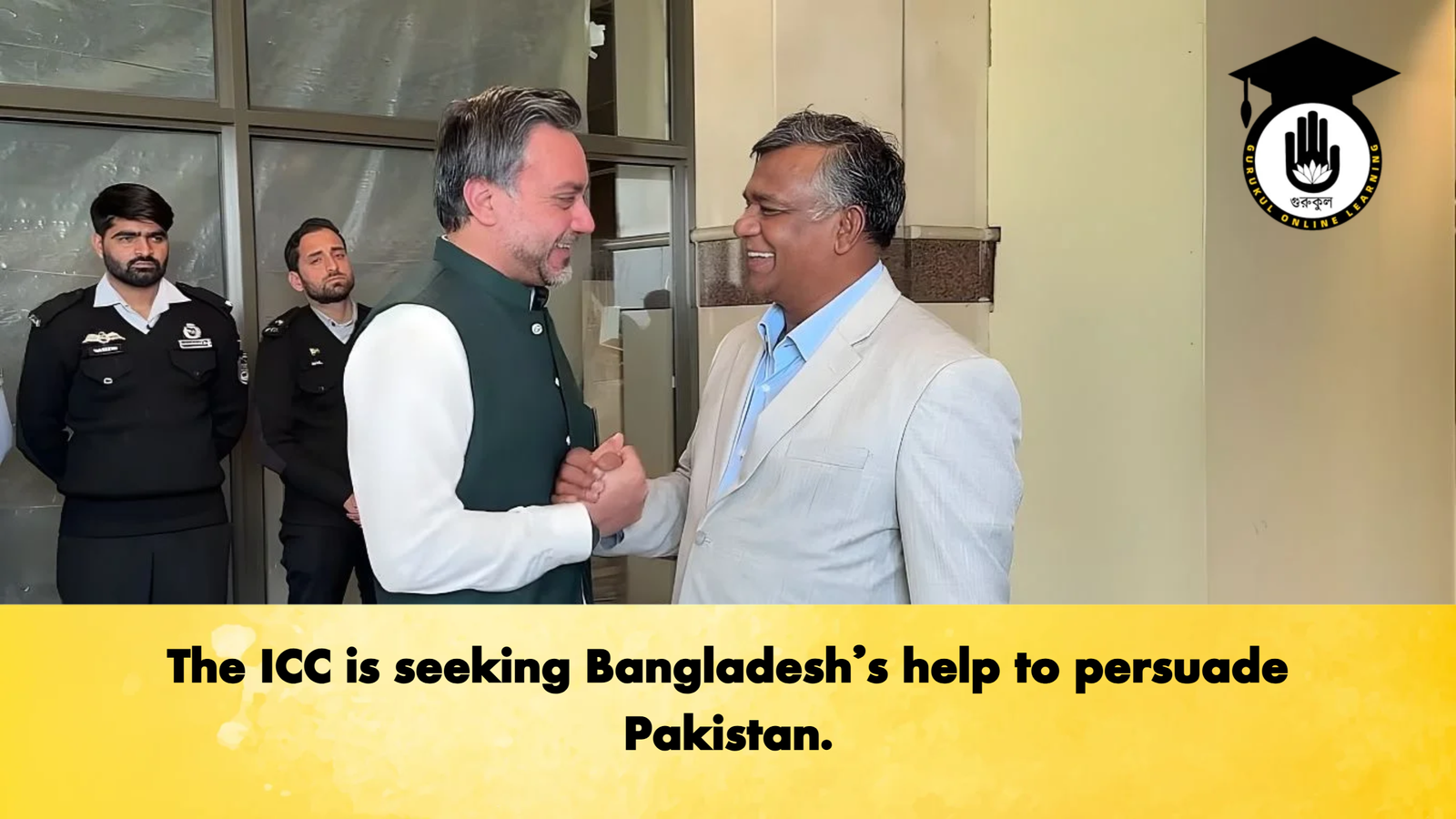
Discussions surrounding this issue dominated yesterday’s deliberations. Adding a new dimension to the talks, Bangladesh Cricket Board (BCB) President Aminul Islam made a sudden, brief visit to Lahore. According to sources close to Pakistan cricket, Aminul’s visit was aimed at fostering a “mutual understanding” between the boards. These sources also provided insights into the likely nature of the agreement.
Following Pakistan’s previous decision to boycott their match against India in support of Bangladesh, the ICC is now seeking Bangladesh’s assistance to bring Pakistan on board. Such involvement benefits Bangladesh as well. By actively supporting the ICC’s mediation, Bangladesh could avert potential losses from non-participation in the World Cup, including:
Entitlement to annual ICC revenue shares
Assurances that future tours by foreign teams to Bangladesh will not encounter obstacles
This mutual understanding forms the basis of Aminul Islam’s high-priority visit. Reports indicate that he received an urgent message late on Tuesday evening, prompting a midnight departure to Lahore. Pakistani media noted that he arrived in the city early yesterday morning, where he was warmly received by Salman Nasir, CEO of the Pakistan Super League (PSL).
The PCB’s official Facebook page posted a video of Aminul’s reception, quoting Nasir: “We extend our heartfelt welcome to our honoured guest in Pakistan.”
The ICC’s emergency meeting included representatives from Pakistan and other member nations, with Bangladesh’s presence being particularly significant. The dialogue stemmed from Bangladesh’s security concerns regarding playing in India, ultimately leading to the team’s withdrawal from the World Cup. Pakistan, from the outset, had shown solidarity with Bangladesh, even casting a vote in support of Bangladesh during ICC deliberations.
Initial reports, citing Pakistani media, suggested Pakistan itself might boycott the World Cup. Although this did not materialise, Pakistan eventually confirmed that it would not play against India on 15 February, explicitly in solidarity with Bangladesh. In response, Indian media reported that the ICC had initiated a diplomatic effort to encourage Pakistan to reconsider its stance. Deputy Chairman Imran Khawaja, representing the Singapore Cricket Association, was assigned a pivotal role as an informal liaison with the PCB.
Prior to a virtual meeting with the ICC, Aminul Islam held discussions with PCB Chairman Mohsin Naqvi, reflecting the high-level coordination involved in this delicate negotiation.
Key Stakeholders and Roles
| Stakeholder | Role in Negotiation | Key Actions |
|---|---|---|
| ICC | Global cricket governing body | Mediates between Pakistan and India; seeks Bangladesh’s support |
| Bangladesh (BCB) | Supporting party | Aminul Islam’s visit to Lahore; provides diplomatic support |
| Pakistan (PCB) | Negotiating party | Initially threatened to boycott India match; participated in emergency ICC meeting |
| India | Opponent team | Awaiting Pakistan’s participation; indirect influence via ICC negotiations |
| Imran Khawaja (ICC Deputy Chairman) | Diplomatic liaison | Coordinates with PCB on ICC’s behalf |
| Salman Nasir (PSL CEO) | Host in Pakistan | Received Aminul Islam in Lahore; facilitates discussions |
This diplomatic effort underscores the high stakes and delicate negotiations shaping the T20 World Cup, revealing that international cricket is as much about strategy off the field as it is on it.