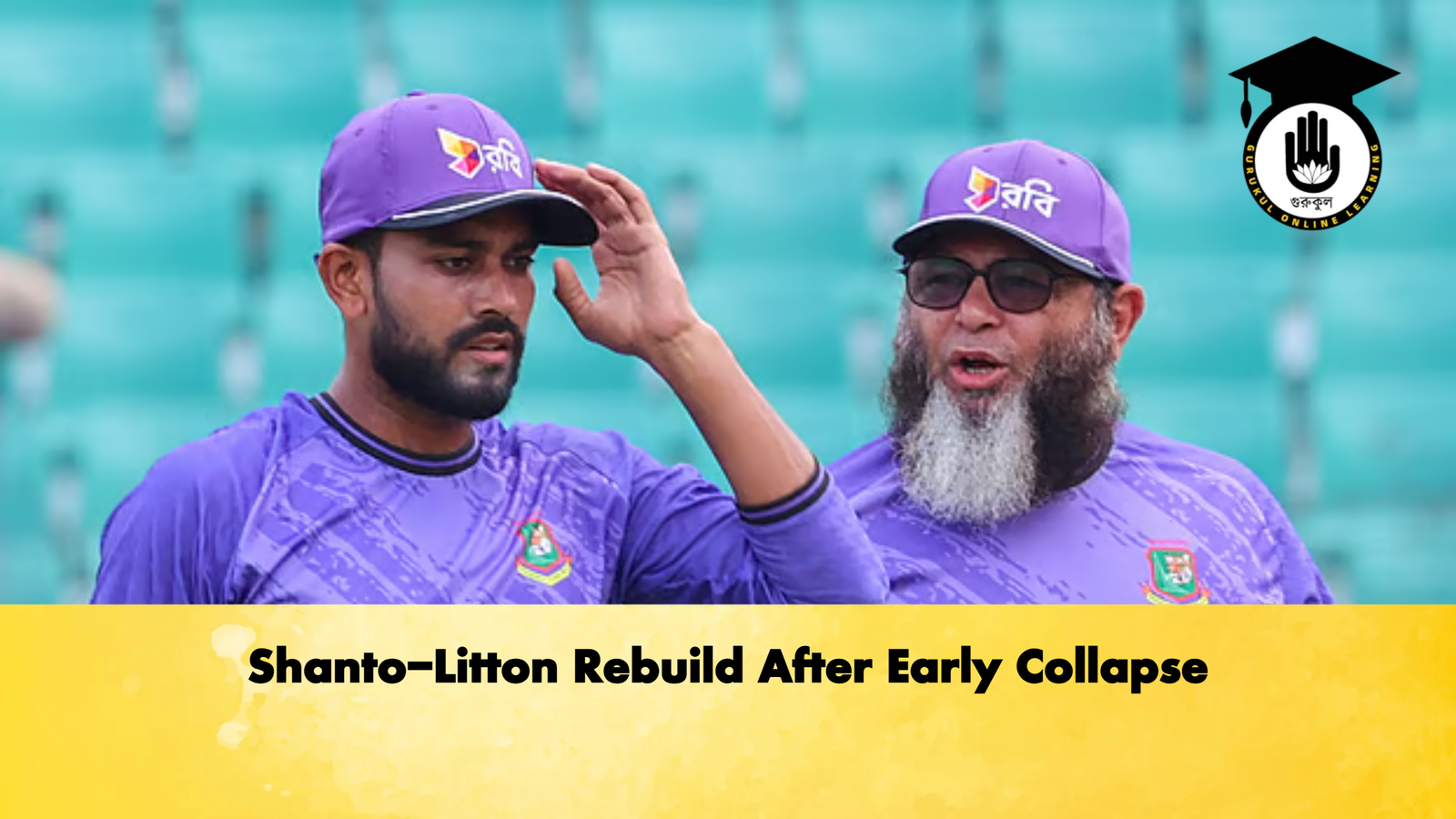
In the third and final One Day International in Chattogram against New Zealand, Bangladesh endured an early batting collapse after being put under immediate pressure by a disciplined and incisive Kiwi pace attack. The visitors exploited the conditions expertly, maintaining tight lines and lengths that left the home side struggling for momentum from the outset.
Bangladesh’s innings faltered almost instantly, as they lost two wickets for just 32 runs. The situation worsened with the dismissal of Soumya Sarkar, further exposing the fragile top order. At that stage, the innings appeared in danger of unraveling completely, with New Zealand firmly in control through relentless bowling pressure and sharp fielding.
However, the course of the innings shifted significantly through a composed and determined partnership between Litton Das and Najmul Hossain Shanto. Initially cautious, the pair focused on survival, carefully negotiating the movement and bounce offered by the pitch. As they settled in, both batters gradually expanded their range, rotating the strike effectively and punishing loose deliveries.
Litton, in particular, played with increasing assurance, combining patience with well-timed aggression. Shanto anchored the innings with maturity, demonstrating excellent judgement in shot selection and an ability to absorb pressure without losing control of the scoring rate. Together, they rebuilt Bangladesh’s innings with a crucial fourth-wicket stand of 160 runs, reviving hopes of a competitive total.
Litton eventually fell for 76 off 91 deliveries, his innings featuring three boundaries and a six. His dismissal came while attempting an expansive shot, as he was bowled by a left-arm spinner while driving through the covers. Despite the setback, his contribution had already provided Bangladesh with much-needed stability and momentum.
Shanto, meanwhile, continued his fluent form, reaching a well-constructed half-century and progressing confidently towards three figures. At the time of reporting, he remained unbeaten on 93, displaying remarkable composure and adaptability. His innings was characterised by resilience, intelligent strike rotation, and an ability to accelerate when required.
After Litton’s departure, Towhid Hridoy joined Shanto at the crease, and the pair continued the rebuilding process with a developing partnership that further strengthened Bangladesh’s position.
Key partnerships
| Partnership type | Runs | Batters involved |
|---|---|---|
| Fourth wicket | 160 | Litton Das & Najmul Hossain Shanto |
| Ongoing stand | 125+ | Najmul Hossain Shanto & Towhid Hridoy |
| Top-order total to 3rd wicket | 107 | Various batters |
New Zealand’s bowling effort was spearheaded by a highly disciplined pace attack. One seamer, in particular, made a decisive impact with figures of 3 wickets for 16 runs in 5 overs, applying early pressure that triggered Bangladesh’s top-order collapse.
Overall, while Bangladesh’s start was fragile, the partnership between Shanto and Litton proved pivotal in restoring balance to the innings. With Shanto still at the crease and well set, Bangladesh’s prospects of posting a competitive total remained firmly alive, provided the lower middle order could build on the foundation already laid.