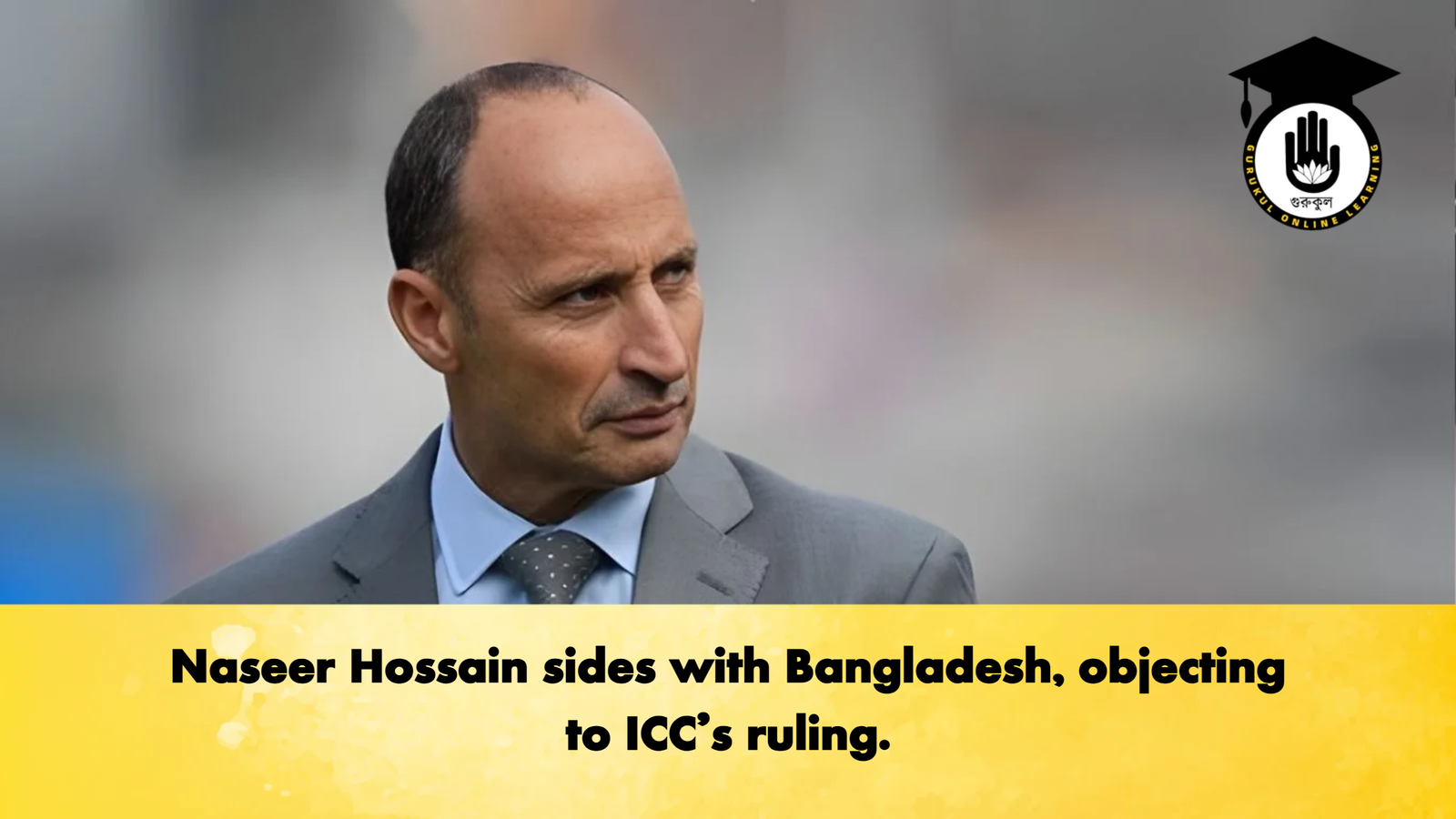
As the T20 World Cup approaches, Bangladesh has emerged as a focal point of international cricket debate, taking a firm stance amidst tensions with the International Cricket Council (ICC). Despite mounting pressure regarding player participation and uncertainties surrounding team selection, the Tigers have refused to waver. Their resolute position has drawn praise from former England captain Nasser Hussain, who has openly commended the team’s courage.
In a recent Sky Sports podcast, Hussain raised questions about the ICC’s decision-making process, highlighting perceived inconsistencies in how regulations are applied. “If a major cricket board were involved, would the ICC have acted with the same rigidity?” he asked. He further illustrated his point: if India had informed the ICC one month prior that its government would not permit participation in a particular host country, would the governing body have applied the rules equally?
Hussain was particularly vocal about Bangladesh’s support for their star bowler, Mustafizur Rahman. “Bangladesh has remained steadfast in their position, standing firmly behind their players’ rights and wellbeing,” he noted. This principled approach, Hussain argues, demonstrates integrity and a commitment to player welfare that smaller cricketing nations often struggle to assert against more powerful boards.
Pakistan has also publicly endorsed Bangladesh’s stance, condemning perceived double standards in global cricket governance. Analysts and commentators have described the joint position of Bangladesh and Pakistan as an unusual example of regional solidarity in a sport often dominated by the influence of wealthier cricket boards.
Hussain highlighted the underlying economic dynamics at play: “For smaller boards, financial leverage is often their only real strength. The revenue impact of high-profile matches, such as India versus Pakistan, is what primarily exerts pressure on the ICC or larger boards.” He stressed that fairness requires equal treatment of all cricketing nations, regardless of their economic or political clout.
In his closing remarks, Hussain reflected on the broader implications: “Economic dominance frequently shapes decisions in international cricket, but with power comes responsibility. That responsibility must never be forgotten.”
The episode has reignited discussions about governance, equity, and player welfare in cricket’s highest echelons, placing Bangladesh’s principled stance under the global spotlight.
Summary Table of Key Points
| Aspect | Details |
|---|---|
| Event | ICC-T20 World Cup controversy |
| Teams Highlighted | Bangladesh, Pakistan, India |
| Key Player | Mustafizur Rahman (Bangladesh) |
| ICC Concern | Player participation & regulation enforcement |
| Hussain’s View | ICC may apply rules inconsistently; fairness for all boards needed |
| Regional Impact | Bangladesh-Pakistan solidarity rare in cricket politics |
| Underlying Issue | Economic influence of large boards over decisions |
| Broader Message | Power in cricket must be paired with responsibility |