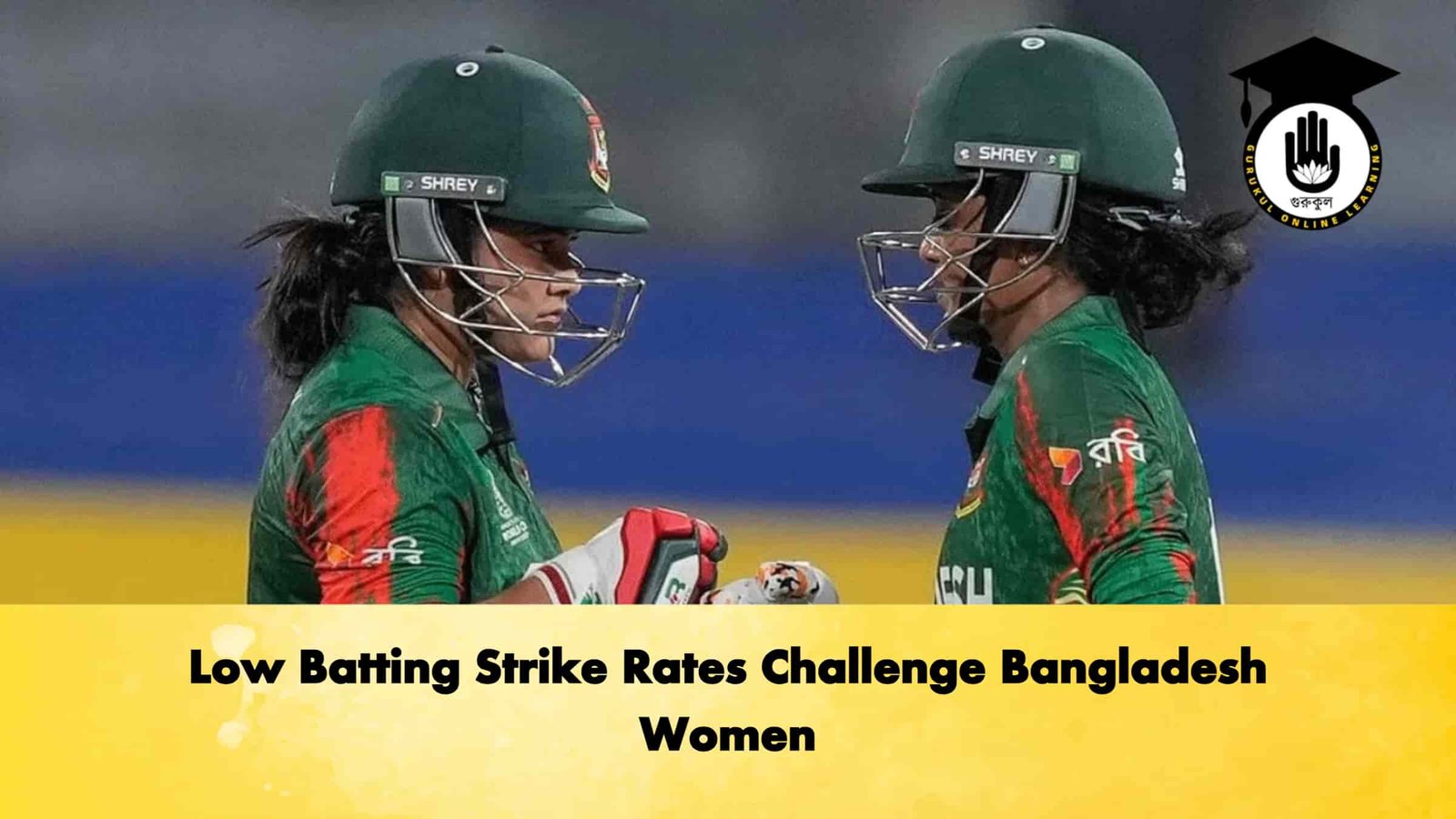
The Bangladesh National Women’s Cricket Team is scheduled to depart Dhaka tomorrow for Scotland to participate in a preparatory tri-nation series ahead of the upcoming ICC Women’s T20 World Cup. Speaking at an official pre-departure press conference on Sunday, 24 May 2026, team captain Nigar Sultana Joty highlighted the squad’s low batting strike rate as a primary operational concern. She noted that the failure of the batting unit to maintain scoring velocity directly impacts the team’s competitive outcomes in the shortest format of the game.
Statistical Discrepancies and Top-Order Vulnerabilities
Statistical data from the preceding two years reveals a significant performance gap between Bangladesh and elite international teams regarding scoring rates. While top-tier international batters routinely maintain a collective strike rate exceeding 136.00 in T20 internationals, the aggregate strike rate for Bangladeshi batters stands at 123.00.
According to Joty, this variance stems from an inability to adapt consistently to changing match conditions. The comparative batting metrics illustrating this performance deficit are detailed in the table below:
| Team Classification | Average Two-Year T20I Strike Rate | Primary Tactical Objective | Top-Order Performance Impact |
| Elite International Teams | Above 136.00 | Rapid boundary accumulation and steady rotation of strike. | Maximises Powerplay fielding restrictions. |
| Bangladesh Women’s Team | 123.00 | Rebuilding innings after early wicket losses. | Slows down middle-overs momentum. |
Joty attributed the deflated strike rates primarily to inconsistencies within the top-order batting unit. She explained that while individual players occasionally demonstrate high-velocity scoring—such as registering a 32-ball half-century in one fixture—they frequently follow it with an arduous 48-ball half-century in the next.
She stated that early wicket losses systematically undermine the team’s scoring rate.
Demands for Lower-Order Tactical Consistency
The captain emphasised that the modern T20 format demands dynamic scoring, where primary boundaries and singles must be converted at a rate higher than one run per delivery. Looking ahead to the World Cup matches in England, Joty called for greater consistency from middle and lower-order all-rounders, specifically naming Shorna Akter and Rabeya Khan.
Reflecting on Shorna’s raw power-hitting capabilities, Joty remarked:
“Shorna definitely has the ability to play good cricket and her performance is positive, but she has not been consistent for the team yet. If she can play according to her capability and contribute regularly, it will be a major achievement for us. Scoring quick runs in the death overs is vital. Shorna has the capacity to play substantial innings, and if she delivers accordingly, it will create a massive impact for the team.”
Joty added that Rabeya Khan, who has established her credentials as a reliable frontline bowler, must also maximize her latent batting skills to provide the squad with extra depth during low-scoring matches. The captain concluded that unless the team’s top order successfully utilizes the initial Powerplay overs to build a solid foundation, the lower-order hitters will remain limited by defensive rebuilding roles.