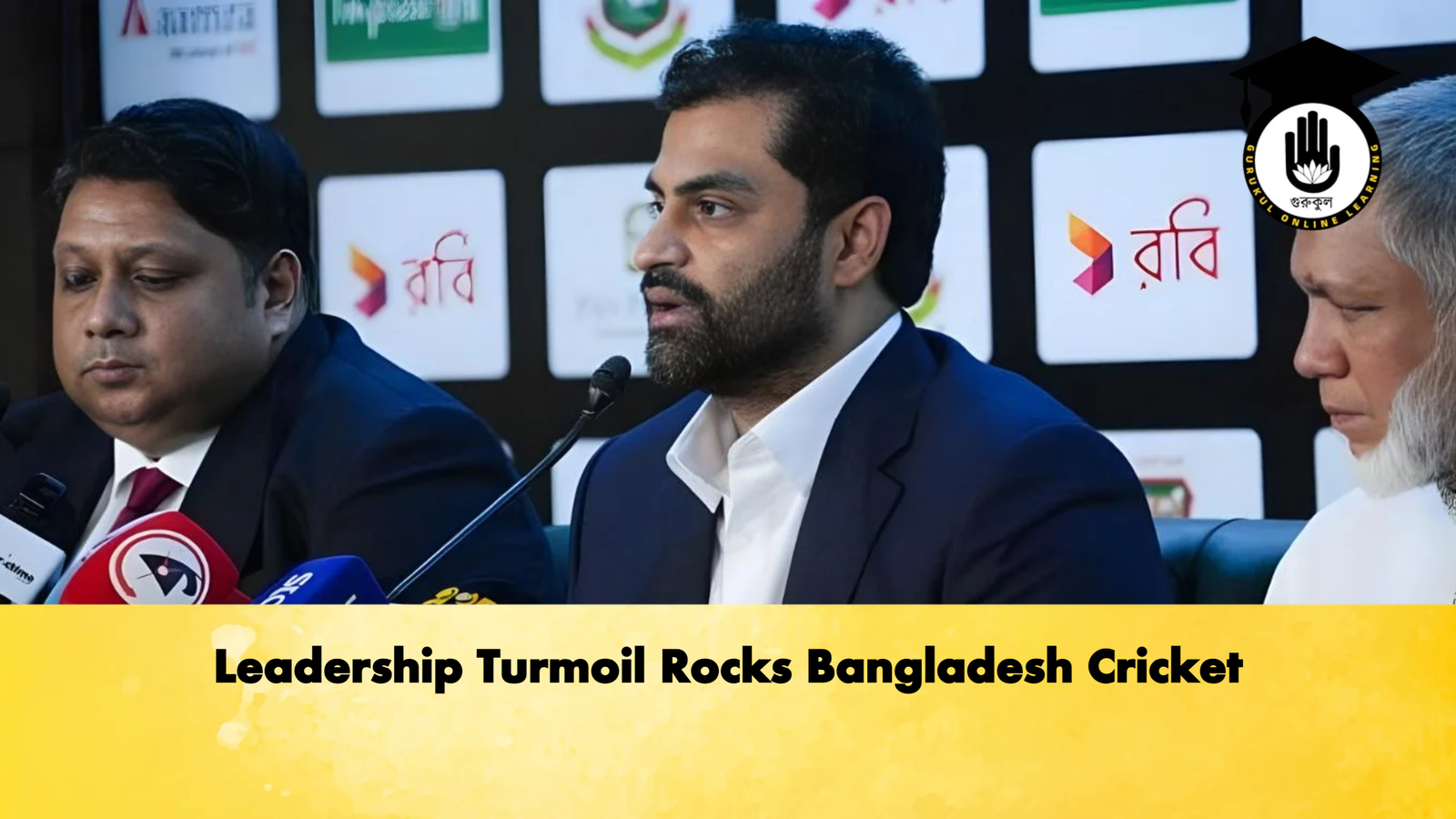
Since the country’s political transition, the administrative structure of Bangladesh’s cricket governing body has been marked by persistent leadership changes and growing uncertainty, placing the sport’s governance under intense scrutiny. What was once considered a relatively stable hierarchy has, within a short span, transformed into a revolving door of top officials, raising serious questions about continuity and long-term planning.
Following the departure of Nazmul Hassan Papon, who had served as president for more than twelve years, the Bangladesh Cricket Board entered a turbulent phase. In the less than two years since his exit, the organisation has witnessed three separate changes at the highest level of leadership, undermining administrative consistency and strategic direction.
In the aftermath of the political shift on 5 August 2024, former national cricketer Faruk Ahmed assumed the presidency of the board. However, his tenure proved short-lived, failing to bring the expected stability. By 2025, another leadership transition occurred when Aminul Islam Bulbul was elected president. His appointment, however, soon became controversial, with allegations of irregularities emerging in the electoral process. Subsequent investigations by the National Sports Council reportedly substantiated concerns regarding procedural flaws, leading to the dissolution of the elected board.
In response, authorities formed an 11-member interim ad hoc committee tasked with restoring order and managing day-to-day operations. Former international cricketer Tamim Iqbal has been appointed to lead this committee, which formally assumed responsibility earlier this week. Despite its interim mandate, observers argue that even this arrangement reflects the continuing instability within the organisation.
Cricket analysts and sports governance experts have expressed concern that such frequent restructuring severely disrupts long-term planning. Player development programmes, infrastructure projects, and performance strategies require consistency at the administrative level, which has been notably absent in recent years. They warn that the lack of institutional continuity could ultimately affect the national team’s competitiveness on the international stage.
Former national cricketer Aftab Ahmed has been particularly critical of the situation, suggesting that the board’s governance has become almost theatrical in its unpredictability. While acknowledging that public attention ensures transparency, he argued that repeated administrative disruptions undermine credibility and hinder professional management. Drawing comparisons with more stable cricketing nations, he noted that effective boards often operate with minimal public turbulence, even when undergoing internal challenges.
Experts further emphasise that without a structured, long-term governance framework, the cycle of instability is likely to continue. They argue that urgent reforms are necessary to establish a durable administrative model capable of supporting both domestic cricket development and international performance objectives.
The table below summarises the recent leadership transitions:
| Period | Leadership | Position/Status |
|---|---|---|
| 2012–2024 | Nazmul Hassan Papon | Long-serving president |
| 2024–2025 | Faruk Ahmed | Appointed president post-transition |
| 2025 | Aminul Islam Bulbul | Elected president; board later dissolved |
| 2026–present | Tamim Iqbal-led ad hoc committee | Interim 11-member governing body |
As Bangladesh cricket navigates this unsettled phase, stakeholders continue to call for institutional stability, arguing that only a coherent and durable governance structure can safeguard the sport’s future development.