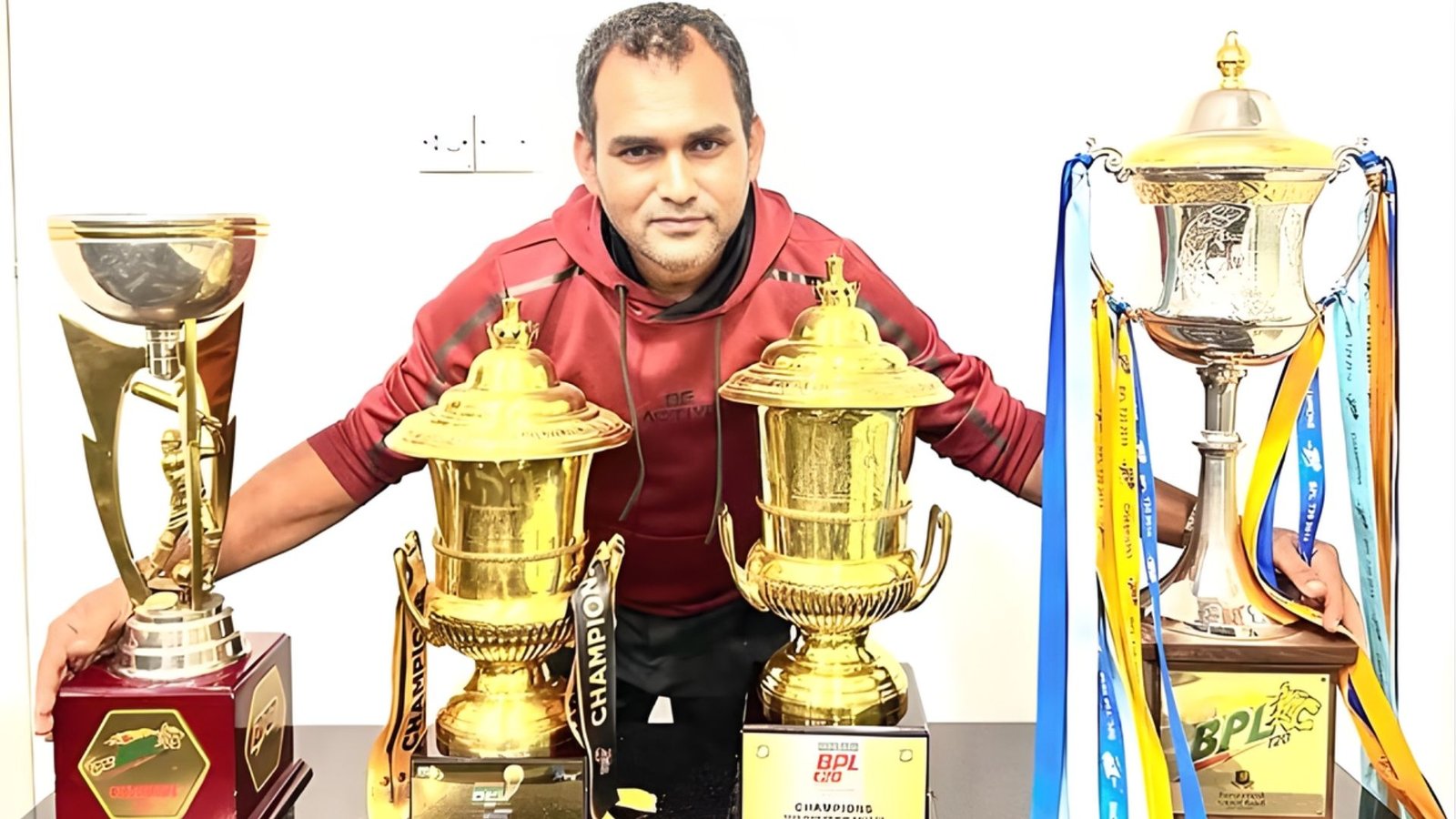
Bangladesh Premier League (BPL) and Mohammad Salahuddin have long been considered inseparable names in the country’s franchise cricket. Over the years, Salahuddin, one of Bangladesh’s most respected coaches, guided the Comilla Victorians to an impressive four BPL championships, turning the franchise into a dominant force. His deep connection with the team had often made him appear synonymous with the brand itself.
However, the landscape has changed. Since the last edition of the BPL, the Comilla Victorians have been absent from the tournament, and Salahuddin has taken on a new role as the senior assistant coach of the Bangladesh national team. With the next BPL season set to begin on 26 December, many wondered whether Salahuddin—one of the league’s most successful tacticians—feels any sense of longing or nostalgia.
When the question was put to him at Mirpur today, Salahuddin responded in his typical composed manner: “I don’t naturally miss anything.” His brief and straightforward response carried the weight of a man focused on present responsibilities rather than past glory.
Salahuddin addressed the media after supervising a batting session featuring Bangladesh’s white-ball cricketers. The national team has set up a special skill-enhancement camp running from 6 to 13 December, scheduled deliberately before the upcoming BPL to provide players with rare, uninterrupted training time.
Explaining the purpose behind the camp, Salahuddin remarked, “There is no end to improvement. Many of you often point out that the players have technical gaps. But we rarely get the time to work on these because of our busy international calendar. There is always a series or a tour.”
The focus of the camp has been predominantly on T20 batting—a format in which Bangladesh has gradually been showing signs of improvement. Salahuddin elaborated on the technical priorities: “In T20 cricket, players often play good shots, but they still end up getting caught. So we are working on how to place the ball into gaps, how to use the pace of the ball effectively, how to score boundaries with reduced risk, and how to rotate the strike more consistently. These are small details that make a big difference in T20 cricket.”
This year, Bangladesh have made noticeable strides in the shortest format. Out of 30 T20 matches, the national side won 15—equalling their highest number of wins in a single calendar year. Salahuddin acknowledged the progress while emphasising that the journey is far from complete: “I’m not saying we have achieved great success yet. But whatever success has come, it has mostly been from T20 cricket. We have been playing regular series and following a clear plan with the World Cup in mind. But yes, there is still room for improvement.”
Salahuddin’s pragmatic outlook suggests that his focus remains fully on the national team’s development rather than on what he may have left behind in the BPL. Whether he truly misses the tournament or not may remain a matter of interpretation, but one thing is clear: his commitment to Bangladesh cricket has not wavered.