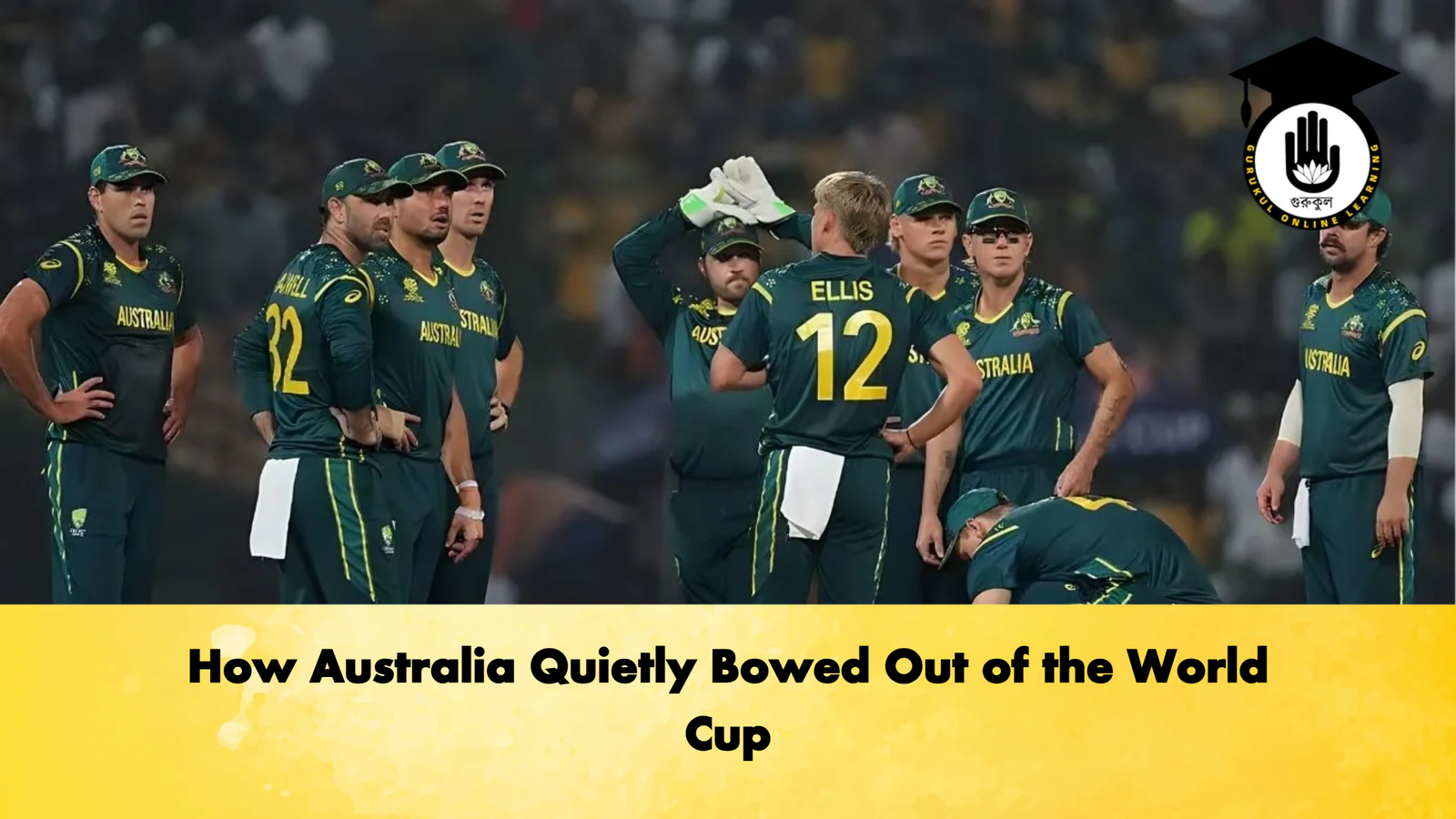
It was the sort of moment that perfectly encapsulates a forgettable World Cup campaign. The first ball of the 16th over in Oman’s innings slipped from Australian hands. Glenn Maxwell, fielding at point, collected a straight return from Wasim Ali and flung it toward the wicketkeeper. The throw was wild, ricocheting harmlessly toward Adam Zampa at short fine leg. But Zampa, the leg-spinner, let it slip through his legs, conceding a single that Wasim scarcely deserved.
The players’ reactions spoke volumes. Zampa looked away. Maxwell looked away. The rest of the Australians did the same. It was inconsequential. By this stage, Australia’s World Cup hopes had already been extinguished. A couple of days earlier, Mitch Marsh’s side had taken the field in Pallekele for a dead rubber—the final group match of Round 1—with nothing left to play for.
Even when Maxwell later bowled Wasim out just a few deliveries later, there was no celebration. None of the wickets in Oman’s innings inspired any enthusiasm. Cameron Green’s remarkable athleticism at a low caught-and-bowled attempt barely earned him a glance before he returned to his mark, reflecting the mood of an Australian side eager for the tournament to end.
Marsh’s decision to bowl first on a batting-friendly pitch set the tone for a campaign that never recovered. Australia had entered the 2026 T20 World Cup with high expectations, boasting a top-seven line-up many teams would envy. Travis Head and Mitch Marsh opened, Cameron Green slotted in at No. 3, followed by Maxwell, Josh Inglis, Tim David, and Marcus Stoinis. David had recently averaged 49 at a strike rate of 197 in 2025, hinting at the potency of this batting ensemble.
Yet the World Cup was a perfect storm of misfortune. Maxwell, Green, and Inglis fell out of form; David returned from injury. Injuries to Pat Cummins and Josh Hazlewood left the fast-bowling attack severely weakened, and Adam Zampa carried a niggling injury. Australia’s bowlers struggled to make any impact against Zimbabwe and Sri Lanka, managing just four wickets across 38 overs.
The outcome was brutal. Australia joined Afghanistan and Ireland as the only Test nations eliminated at the preliminary stage. Losing to Zimbabwe—a side that hadn’t qualified for the previous edition—and to a co-host Sri Lanka, underscored the scale of the collapse. It has been widely criticised at home, though the commentary often felt more like a roadside gawking at a car wreck than nuanced analysis.
Australia’s T20 struggles are hardly new. Since 2012, they have only reached the semifinals once, in 2021, when they eventually won the title. The rapid frequency of these tournaments, coupled with injuries and inconsistent form, meant this World Cup would go down as one of their most forgettable campaigns.
Cricket Australia has promised a “forensic review,” but for now, the memory of their Pallekele misadventures lingers—a painful reminder that even the most celebrated teams can sleepwalk out of a tournament.
Australia’s 2026 T20 World Cup Performance – Round 1
| Match | Opponent | Result | Key Notes |
|---|---|---|---|
| Australia vs Ireland | Win | Good start, limited threat | |
| Australia vs Zimbabwe | Loss | Only 2 wickets in 20 overs | |
| Australia vs Sri Lanka | Loss | Only 2 wickets in 18 overs | |
| Australia vs Oman | Win | Dead rubber; uninspired fielding |