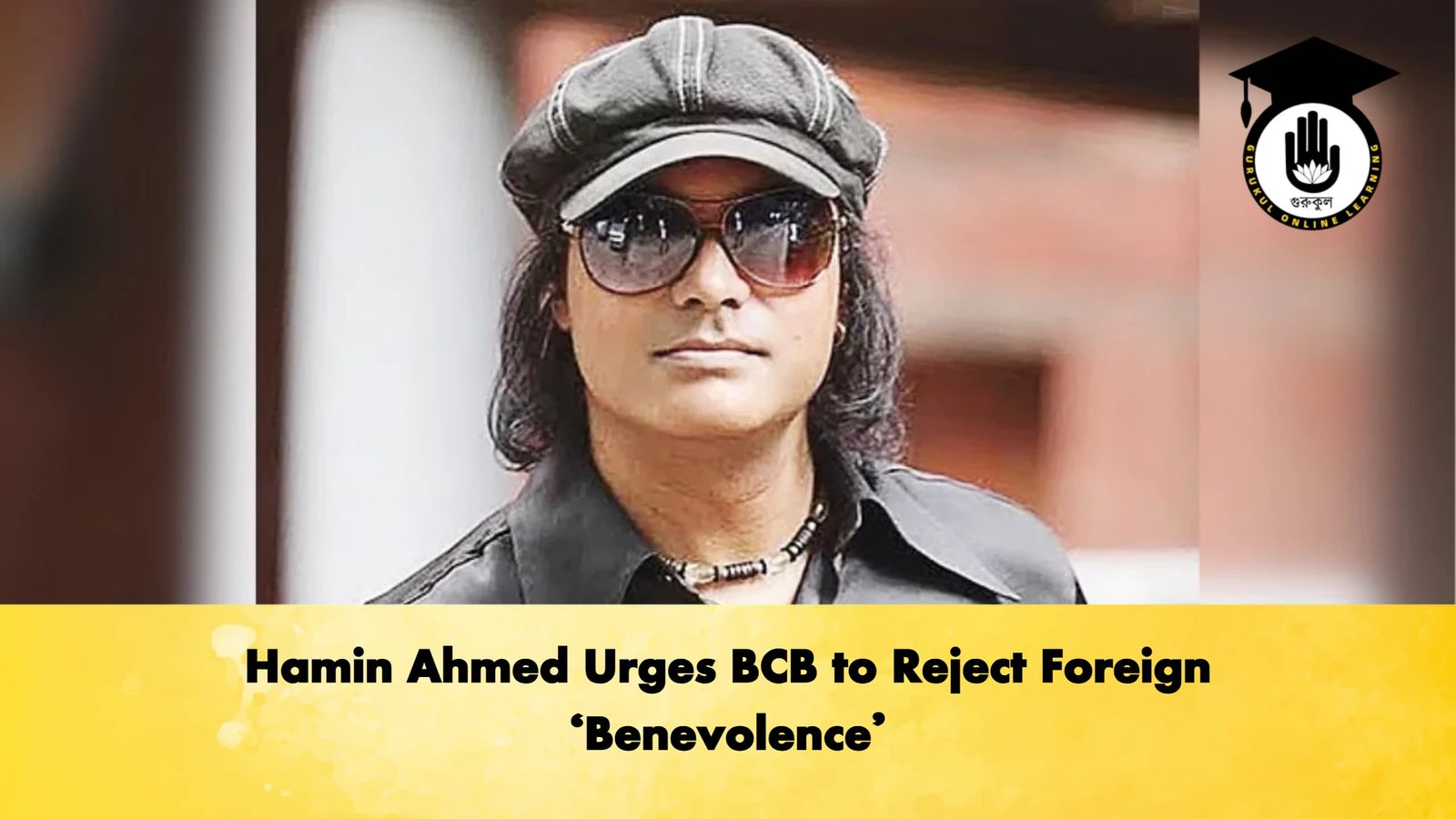
The ongoing dispute between the Bangladesh Cricket Board (BCB) and the International Cricket Council (ICC) has found its most vocal critic in Hamin Ahmed. The iconic frontman of the rock band Miles and a former competitive cricketer has launched a scathing broadside against the prospect of Bangladesh playing its T20 World Cup fixtures in Pakistan, following the board’s refusal to tour India on security grounds.
“No Need for Hollow Generosity”
In a viral social media manifesto, Ahmed lauded the BCB’s “excellent” decision to boycott India but warned against falling into the trap of accepting “dubious” regional hospitality. His comments came in response to reports from Pakistan’s Geo TV that the Pakistan Cricket Board (PCB) was prepared to host Bangladesh’s matches if Sri Lanka proved unviable.
Ahmed’s rejection was both fierce and politically charged. He argued that a nation currently “imprisoning its greatest-ever cricketing icon and leader, Imran Khan,” has no moral authority to offer safety or “sympathy” to others.
“Bangladesh does not need the ‘generosity’ of a country whose economy and cricket rankings are at an all-time low,” Ahmed asserted. “We must not seek refuge with a ‘genocidal’ historical adversary that cannot even protect its own national heroes.”
The Musician’s Demand for Sovereignty
Transitioning from the cricket pitch to the rock stage decades ago, Ahmed remains a cultural arbiter in Bangladesh. He insists that rather than scouting for neutral hubs, the Sports Adviser and the BCB must exhibit the “mettle” to bring the tournament to Bangladeshi soil.
| Strategic Concern | Hamin Ahmed’s Stance |
| The India Boycott | Total Support: Non-negotiable due to player safety. |
| The Pakistan Offer | Total Rejection: Cites political instability and historical trauma. |
| Venue Alternative | Home Soil: Demands the ICC allow matches in Dhaka and Sylhet. |
| Transparency | Mandatory: Demands the BCB publish the ICC’s “secret letters.” |
A Call for Accountability and Transparency
Beyond the venue row, Ahmed has challenged the BCB to release confidential correspondence from the ICC, which reportedly contains specific “conditions” for participation. He maintains that the players and the public have a “right to know” the nature of the pressure being exerted on the national team.
Ahmed concluded with a stern warning to the current administration: if the BCB fails to negotiate a “Homecoming” for these matches or succumbs to a disadvantageous deal, the leadership must take full responsibility for the fallout.
“It is time to move beyond grand rhetoric,” Ahmed concluded. “We want to see Bangladesh play, but only in a manner that preserves our national dignity. If we have the stadiums and the fans, why should we be playing anywhere else?”