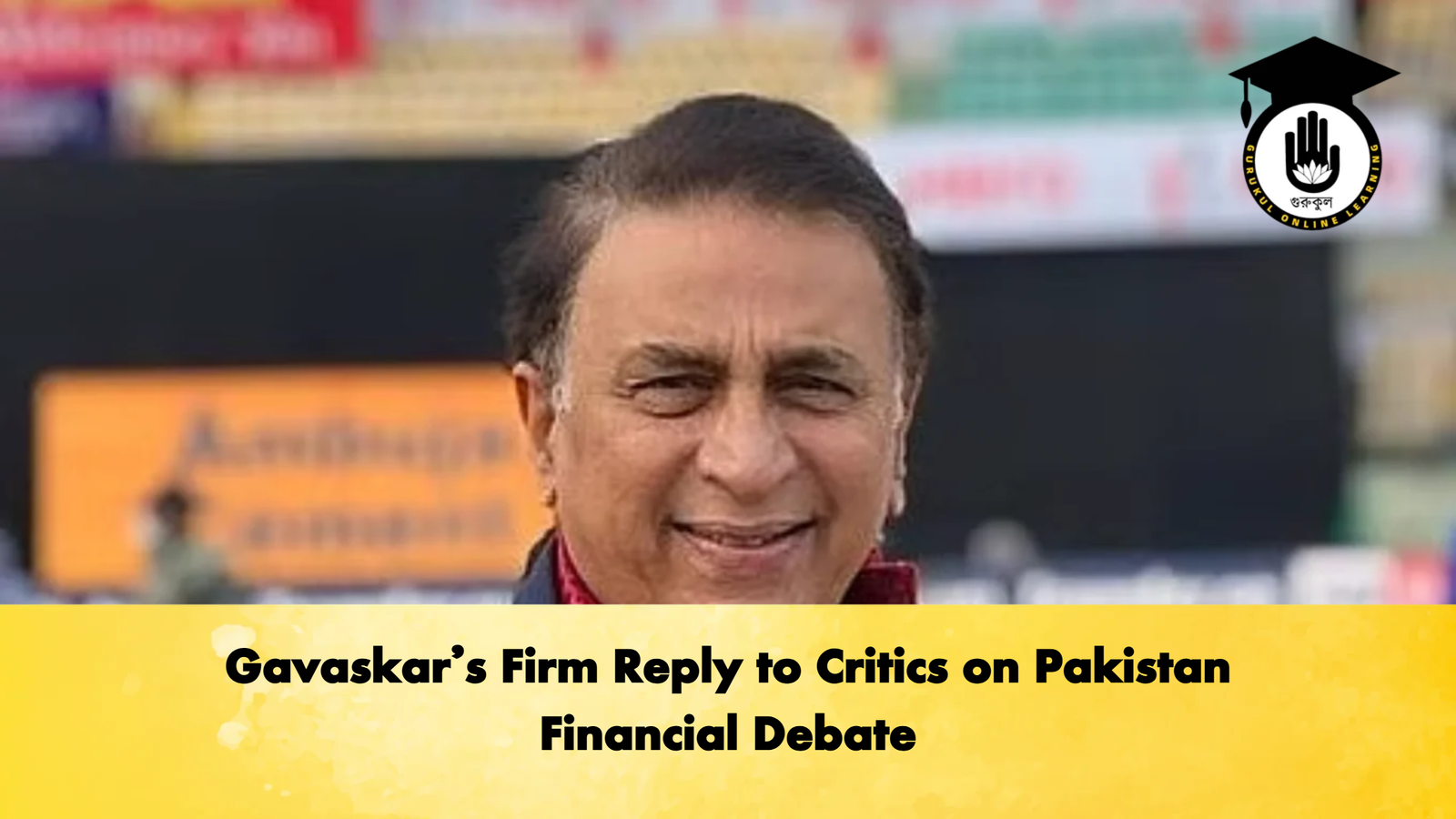
Former India captain Sunil Gavaskar has issued a firm rebuttal to allegations of “double standards”, as a fresh controversy unfolds around his remarks on financial links between Indian-affiliated franchises and Pakistani cricketers. Once celebrated for letting his bat do the talking, Gavaskar now finds himself shaping headlines through his outspoken views.
The debate was triggered during the 2026 player draft of The Hundred, where Pakistan leg-spinner Abrar Ahmed was signed by Sunrisers Leeds. The franchise operates under the Sun Group, a Chennai-based conglomerate headed by Kalanithi Maran. His daughter, Kavya Maran, is a prominent stakeholder across multiple Sunrisers franchises globally, including those in India, England, and South Africa.
Gavaskar had publicly raised concerns that such arrangements could indirectly facilitate financial flows from Indian-linked entities to Pakistani players. Given the historically strained political and sporting relations between India and Pakistan, his remarks quickly reignited debate over the ethics of cross-border financial engagement in modern franchise cricket.
However, critics were quick to challenge his stance. They argued that Gavaskar’s continued involvement in international broadcasting—alongside occasional appearances with Pakistani cricket personalities—undermines his position. Some labelled this a contradiction, questioning whether his criticism of financial links was consistent with his own professional engagements.
In response, Gavaskar clarified his position in an interview with the Indian daily Mid-Day. He emphasised that his work with the International Cricket Council and the Asian Cricket Council operates under a multilateral revenue-sharing structure. According to him, earnings generated from such platforms are distributed among all participating cricket boards, rather than being channelled from any single national entity.
“I do not pay any player—Indian or otherwise,” Gavaskar stated. “The revenues are governed by international bodies and shared collectively. It is therefore inaccurate to hold me responsible for financial transactions of that nature.”
He further asserted that his objection is specifically directed at Indian-origin funds reaching Pakistani players, whether directly or indirectly. Gavaskar also suggested that historically, such financial exchanges have not been reciprocal, adding another layer to his argument.
Another aspect of the controversy centres on Gavaskar’s appearance during the 2025 ICC Champions Trophy in Dubai. He featured in a YouTube programme titled ‘DP World Dressing Room’, alongside former Pakistan greats Wasim Akram and Waqar Younis. Critics pointed to this as evidence of inconsistency, arguing that sharing a platform with Pakistani figures contradicts his stated position.
Gavaskar, however, dismissed these claims, maintaining that his participation in the programme involved no financial compensation. He also clarified that he had no formal or paid involvement in similar initiatives surrounding other tournaments, including the Asia Cup.
The broader issue reflects the increasingly complex intersection of sport, commerce, and geopolitics in the era of global franchise cricket. While leagues such as The Hundred are designed to be commercially inclusive and internationally diverse, they inevitably raise questions about national sensitivities and financial ethics.
A summary of the key points in the controversy is presented below:
| Issue | Gavaskar’s Position | Critics’ Perspective |
|---|---|---|
| Franchise signings | Opposes Indian-linked funds reaching Pakistani players | Viewed as overly rigid |
| Commentary roles | Revenue shared internationally | Seen as indirect involvement |
| Media appearances | No personal remuneration | Considered inconsistent |
As cricket continues to globalise, the Gavaskar episode illustrates the challenges faced by former players navigating modern realities—where professional collaboration often transcends national boundaries, even as political tensions persist.