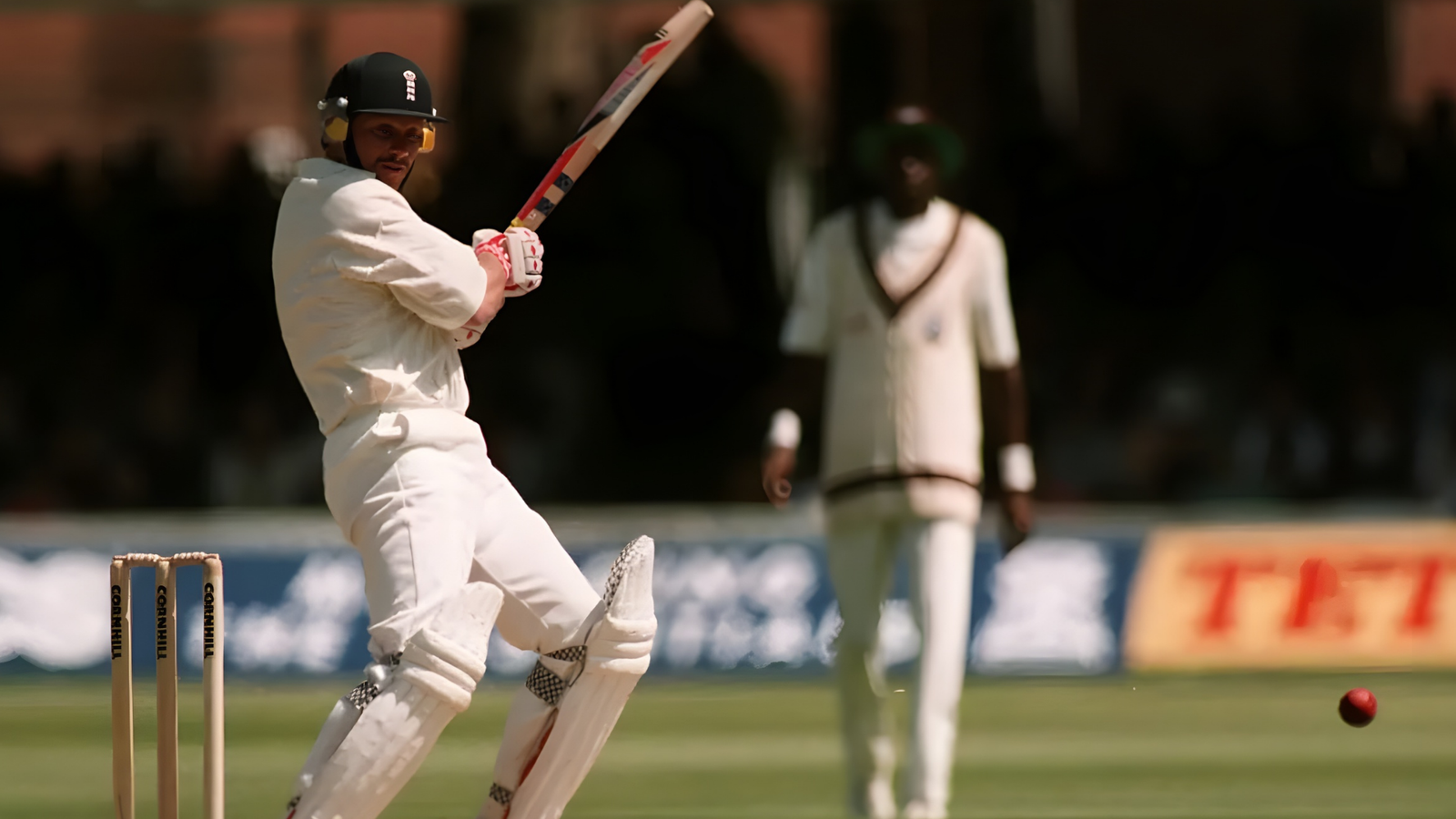
The cricket world is mourning the loss of Robin Smith, the former England batter renowned for his bravery against the most fearsome fast bowlers of his generation. Smith passed away unexpectedly at his home in South Perth, Australia, at the age of 62. His family confirmed the news but urged fans and media not to speculate about the cause of death until the official medical investigation is complete.
Smith’s international journey began in 1988, and over the next eight years he became an unmistakable presence in England’s batting order. Across 62 Test matches, he compiled 4,236 runs with nine centuries, averaging nearly 44—an exceptional figure in an era dominated by deadly pace attacks.
His ability to tackle fast bowling set him apart. Against the West Indies, whose pace battery was the most intimidating in cricket history, Smith consistently rose to the occasion. His powerful square cut became legendary, a stroke that embodied his aggressive yet controlled style. Whether in Kingston, Bridgetown, or The Oval, Smith’s confrontations with Caribbean pacers were among the standout battles of 1990s Test cricket.
One of his career-defining displays came on England’s 1990 tour of the Caribbean, where he helped engineer a rare victory in Jamaica. He continued to dominate against the West Indies in home series, becoming a symbol of England’s determination during turbulent years.
Smith’s greatness extended to ODIs as well. His unbeaten 167 at Edgbaston in 1993 was not only masterful—it was a national record that stood for more than two decades. Few innings in England’s white-ball history have been as bold, stylish, and complete.
Yet, despite his strengths, Smith’s career suffered due to perceived vulnerability against spin. The rise of Shane Warne in 1993 proved a turning point. Warne’s brilliance influenced England selectors to omit Smith from the 1994–95 Ashes tour. Fate, however, had other ideas: Smith and Warne became close friends years later, with Warne eventually joining Hampshire thanks in part to Smith’s encouragement.
Growing up in Durban, Smith trained in a backyard cricket net designed by his father. Surrounded by greats like Barry Richards and Mike Procter, he developed the technique, courage, and power that would define his England career. His move to England, alongside his brother Chris, opened the door for both siblings to contribute to English cricket history.
Smith retired earlier than many expected, playing his final Test at age 32 against South Africa in 1996. Although he still had much to offer, selectors were intent on rebuilding the squad. Even today, many feel that Smith’s Test career ended prematurely.
Beyond cricket, Smith endured years of private struggle. He spoke with heartbreaking honesty in his autobiography about his battle with alcohol and mental health challenges. But in recent years, he appeared rejuvenated, actively engaging with the cricketing community. Just last week, he attended the Ashes Test in Perth and met young England Lions players during a training session.
ECB Chair Richard Thompson said Smith brought pride to England supporters and inspired generations with his courage at the crease. “He faced the fastest bowlers in the world with a smile and steel,” Thompson said. “He leaves a legacy of resilience, talent, and unforgettable entertainment.”