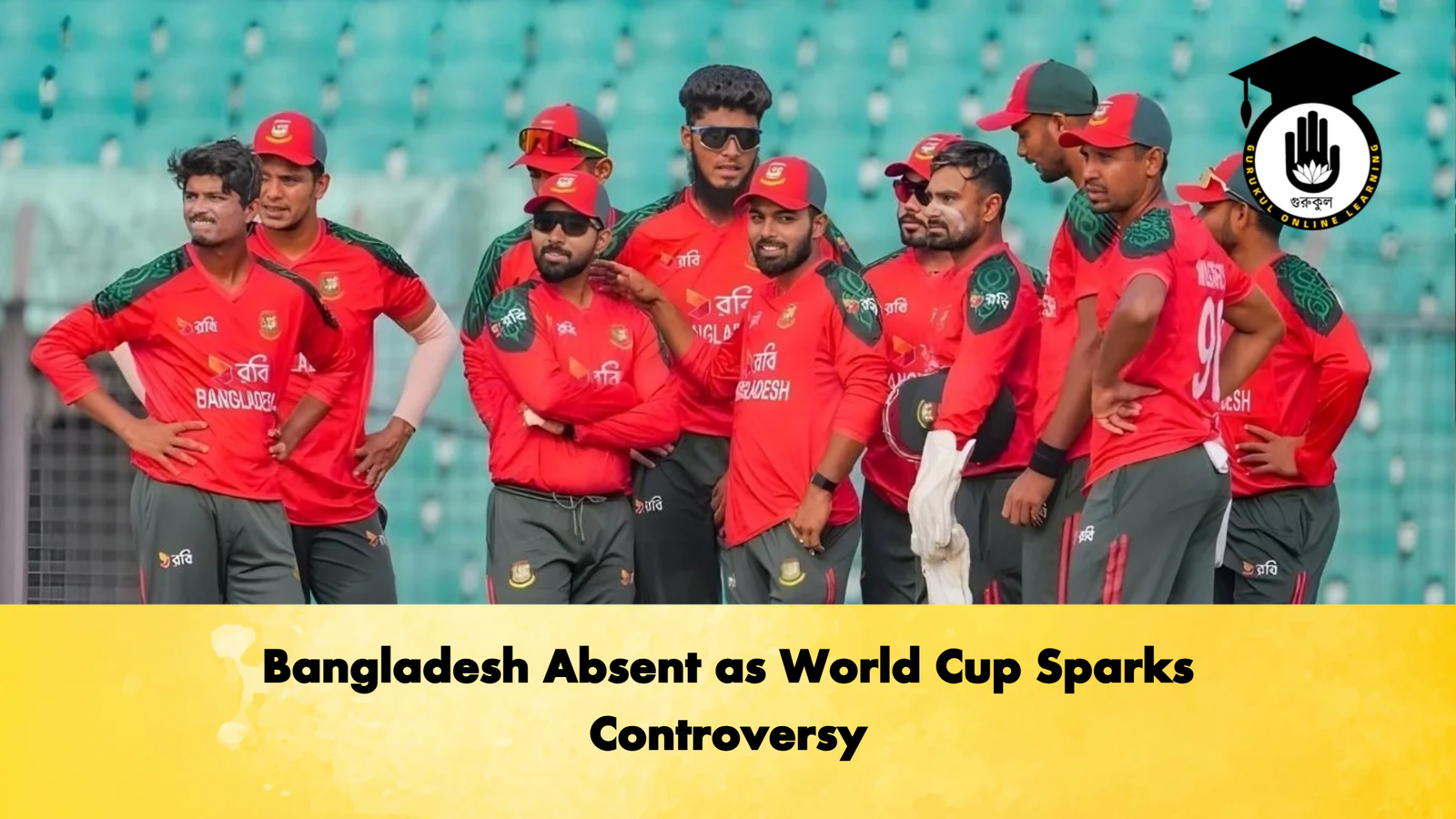
A controversial and unprecedented chapter in T20 World Cup history begins today, marking a watershed moment not only for Bangladesh cricket but also for the politics of the global game. From the inaugural T20 World Cup in South Africa in 2007 through to the 2024 edition, Bangladesh featured in every tournament. Yet, for the first time in nearly two decades, the Tigers are missing from the tenth edition of the competition in 2026.
Co-hosted by India and Sri Lanka, the tournament’s opening has been overshadowed by Bangladesh’s exclusion—an absence felt keenly by the country’s cricket followers and viewed internationally as an uncomfortable reminder of how power dynamics increasingly shape the sport. Many observers argue that, across 19 years of T20 World Cup history, cricketing merit has never been so decisively eclipsed by boardroom politics.
Critics contend that the growing influence of the Board of Control for Cricket in India has compromised the International Cricket Council’s neutrality. According to this view, governance decisions are now driven less by sporting fairness and more by commercial leverage and diplomatic calculations. Bangladesh’s omission, despite its consistent participation and established status, has therefore been interpreted by analysts as a symptom of a deeper structural imbalance within world cricket.
The crisis can be traced back to the sudden withdrawal of Bangladesh fast bowler Mustafizur Rahman from the Indian Premier League, an episode that reportedly strained relations between the boards. Soon afterwards, the Bangladesh Cricket Board cited security concerns and fears of extremist threats, formally expressing reluctance to play World Cup matches in India. The BCB proposed that all of Bangladesh’s fixtures be staged in Sri Lanka instead. The ICC rejected this request and, in a move that shocked many, replaced Bangladesh with Scotland—triggering widespread criticism across the cricketing world.
The fallout did not end there. In protest, Pakistan announced it would boycott the high-profile India–Pakistan match scheduled for 15 February. This decision placed the ICC under acute financial pressure. Industry estimates suggest that the absence of this single fixture could result in losses of approximately 61.12 billion taka, factoring in broadcasting rights, advertising revenue and ticket sales. With the tournament’s commercial appeal heavily reliant on this rivalry, the ICC has been keen to persuade Pakistan to reconsider.
Despite the national team’s absence, Bangladesh is not entirely missing from the global stage. Umpires Sharfuddoula Ibne Shahid and Gazi Sohel are officiating at the tournament, while seasoned broadcaster Athar Ali Khan is part of the commentary panel—subtle reminders of the country’s enduring presence in world cricket.
Domestically, the BCB has sought to lift spirits by launching the “Indomitable Bangladesh T20 Cup”, featuring three teams—Dhumketu, Durbaar and Durdanto—aimed at sustaining competitive momentum and nurturing local talent.
The World Cup begins today in Colombo with Pakistan facing the Netherlands. Twenty teams will contest 55 matches across eight venues in India and Sri Lanka, progressing from four groups to the Super Eight, semi-finals and final. India, England, Australia, South Africa and Pakistan are widely regarded as leading contenders, while Italy’s debut adds a fresh narrative.
For Bangladesh, this World Cup is undeniably bittersweet. Yet, even in absence, the Tigers have asserted a principled stance on security and national dignity—ensuring their voice resonates loudly within the evolving politics of international cricket.
ICC Men’s T20 World Cup 2026: Key Facts
| Category | Details |
|---|---|
| Total teams | 20 |
| Host nations | India & Sri Lanka |
| Total matches | 55 |
| Groups | 4 |
| Prize money | 1.6 billion taka |
| Possible final venues | Colombo / Ahmedabad |
| Bangladesh representation | 2 umpires, 1 commentator |