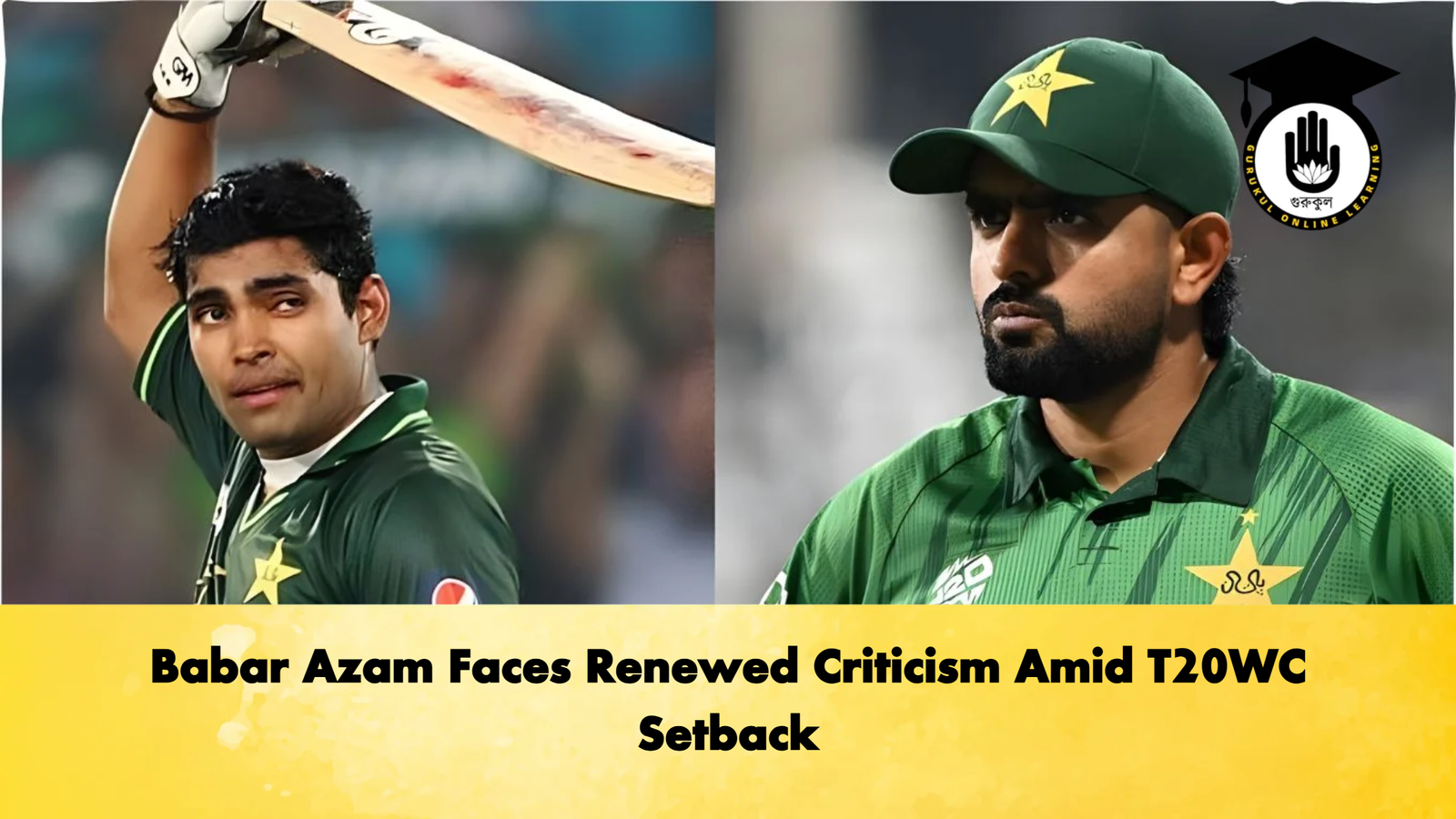
Pakistan’s cricket captain, Babar Azam, is once again under intense scrutiny following his side’s disappointing performance against England in the Super Eight stage of the ongoing 2026 T20 World Cup. The defeat has left Pakistan’s hopes of reaching the semi-finals in a precarious position, with Babar’s batting form and leadership coming under fresh debate.
Adding fuel to the discussion, Babar’s cousin and former Pakistan international, Umar Akmal, indirectly questioned the captain’s current form. Akmal shared a video on Instagram of his own innings against Australia in the 2014 T20 World Cup, where he scored 94 runs off just 54 balls after Pakistan had lost two wickets for 25 runs. That knock propelled Pakistan to a total of 191. Analysts have interpreted Akmal’s post as a subtle critique, contrasting past heroics with Babar’s present struggles.
In the Super Eight encounter, Pakistan batted first, posting a total of 164 runs. Babar contributed only 25 runs from 24 balls. Given the match context and the required strike rate, his innings has been widely questioned. England chased down the target comfortably, losing only two wickets, and secured a semi-final berth.
Reactions from former cricketers and analysts have been critical:
| Former Cricketer | Comment |
|---|---|
| Imad Wasim | “How many more matches will slip away like this? As a senior player, his responsibilities are greater.” |
| Mohammad Amir | “Babar’s form and leadership in the side are currently inadequate.” |
| Ahmed Shehzad | “At such a crucial stage of the T20 World Cup, this form is deeply disappointing.” |
Experts suggest that persistent failures are placing increasing pressure on Babar’s captaincy. With the team relying heavily on his experience, his current slump has intensified both strategic and psychological challenges within the Pakistan camp.
The combination of Umar Akmal’s social media post and the pointed criticism from former professionals reflects rising expectations among fans for renewed strategy and leadership. Although Babar remains one of Pakistan’s premier batters, his current form poses a significant challenge for the team.
Social media scrutiny, coupled with professional critiques, has intensified the debate surrounding Pakistan’s preparations. Beyond the immediate task of reaching the semi-finals, the team faces a broader challenge: reinforcing mental resilience, refining strategies, and ensuring leadership stability.
Clearly, the spotlight on Babar Azam is not merely about runs scored; it signals a need for Pakistan to rethink tactical approaches and leadership dynamics. The team must now focus on collective performance, leadership support, and strategic innovation to navigate the high-stakes phase of the tournament.