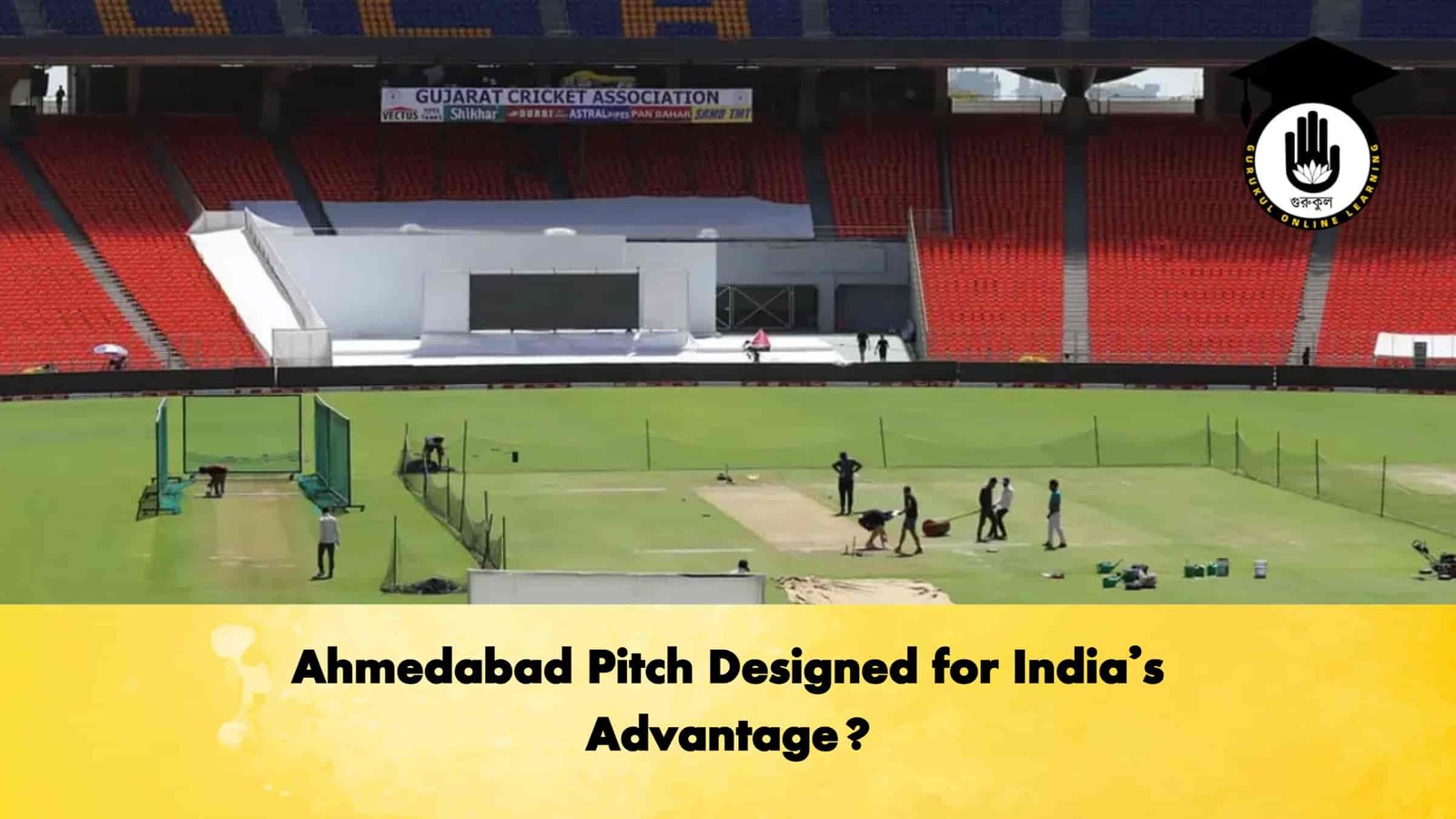
The Narendra Modi Stadium in Ahmedabad, the largest cricket arena in the world, is preparing to host the T20 World Cup final between India and New Zealand. While it is India’s home ground, history has often painted Ahmedabad as a challenging venue for the hosts. In the 2023 ODI World Cup final and in the Super Eight stage of this tournament, India struggled to assert dominance, intensifying expectations for the final in front of a packed stadium.
In response, meticulous efforts are reportedly underway to prepare a pitch that complements India’s strengths. Sources indicate that the curators are constructing a mixed-soil wicket, with a larger proportion of red soil relative to black soil. The combination is unusual even in international cricket and is aimed at producing a “sporting pitch”—one that balances stroke-friendly conditions for batsmen with enough bounce and pace for bowlers.
India enters the match as the natural favourite, but the venue’s previous disappointments linger in memory. During the 2023 ODI World Cup final, Australia dominated on a black-soil pitch, leaving the hosts unable to mount resistance. Similarly, in the first Super Eight match of the current T20 World Cup, South Africa handed India a heavy defeat on the same type of surface. Learning from these setbacks, curators are now crafting a pitch with red soil predominance, inspired by conditions where India has historically thrived.
Pitch Composition and Strategic Implications
| Component | Estimated Proportion | Likely Impact on Play | Historical Context |
|---|---|---|---|
| Red Soil | 60–70% | Favors stroke play, consistent bounce | India has excelled on red-soil wickets, e.g., Wankhede Stadium |
| Black Soil | 30–40% | Adds extra bounce and pace for bowlers | India struggled on black-soil wickets against Australia and South Africa |
| Mixed Soil | – | Balanced conditions for both batsmen and bowlers | Crafted to prevent repeat of prior losses at Ahmedabad |
The emphasis on red soil is intended to allow India’s batsmen to play freely, enabling fluent stroke-making while retaining some assistance for bowlers. By utilising this strategic pitch design, India hopes to overcome Ahmedabad’s reputation as a “cursed” ground and claim their second consecutive T20 World Cup title.
With the final imminent, the spotlight will not just be on the players but also on the wicket itself. The combination of historical lessons, careful curation, and home advantage could prove decisive in turning the tide for India at the Narendra Modi Stadium.