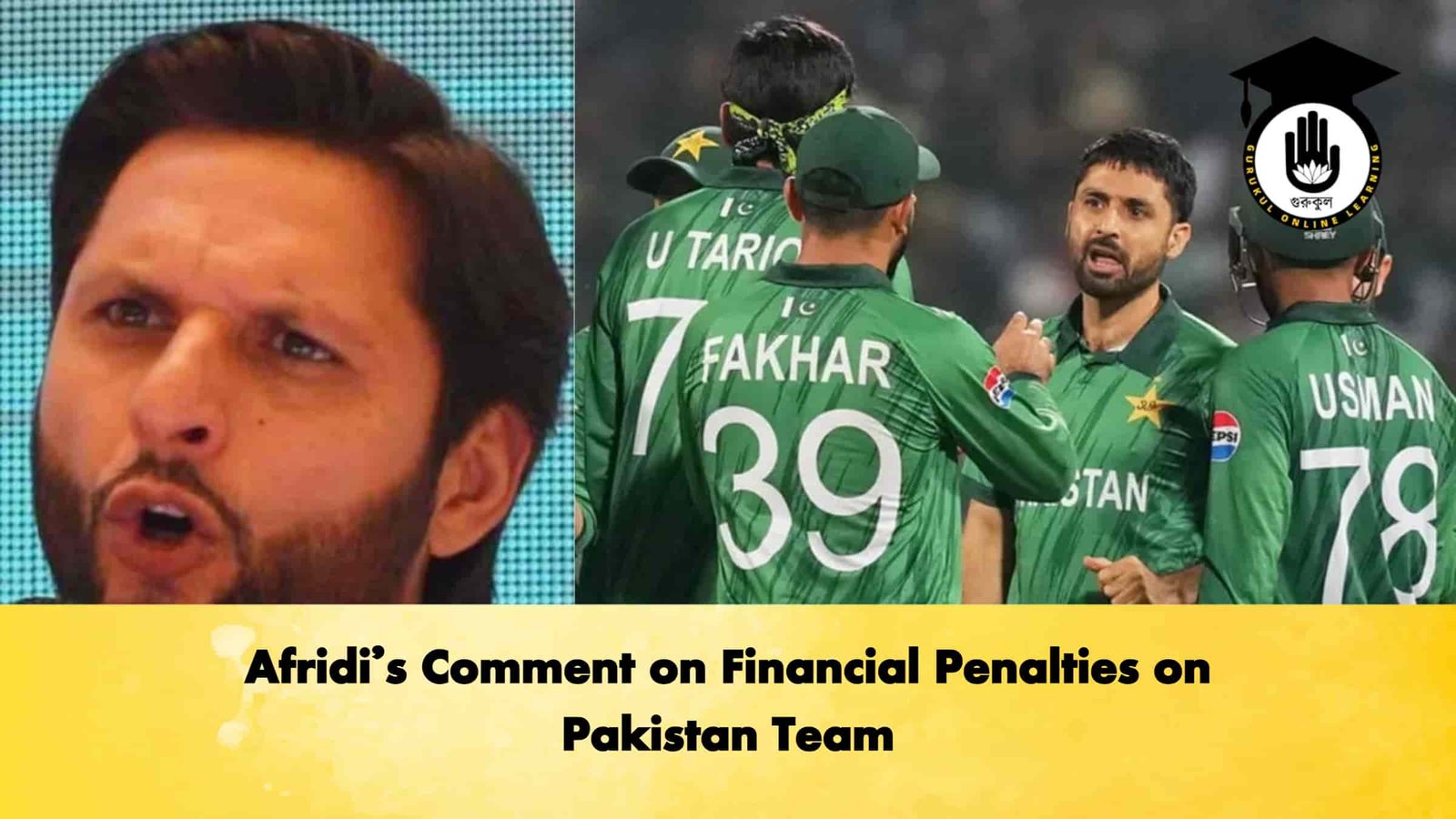
Pakistan cricket has been thrust into fresh controversy after the national side failed to reach the semi-finals in four consecutive tournaments organised by the International Cricket Council. Despite securing victory over Sri Lanka national cricket team in their final Super Eight fixture at the recent T20 World Cup, Pakistan were unable to progress to the last four, prompting sharp criticism at home.
In response to the disappointing run, the Pakistan Cricket Board (PCB) imposed financial penalties on members of the squad. According to reports, each player has been fined five million Pakistani rupees. The move marks a departure from customary practice, where underperforming players are typically omitted from selection rather than subjected to monetary sanctions.
The unprecedented nature of the decision has sparked debate across the cricketing fraternity. Former all-rounder Shahid Afridi described the step as reflective of a “narrow mindset”. Speaking to Samaa TV, he said he did not oppose disciplinary action in principle but questioned both the scale and the effectiveness of the fine.
“Imposing five million rupees — what kind of punishment does that amount to?” Afridi asked. “It is relatively insignificant and unlikely to deliver the intended message.”
Afridi argued that genuine accountability should come through selection policy rather than financial measures. In his view, non-performing players ought to be sent back to domestic first-class cricket to regain form and, in certain cases, be excluded from national selection for a defined period — potentially up to two years.
Central Contract Structure
Under the PCB’s central contract system, players’ annual remuneration and ICC revenue shares are structured as follows:
| Player Grade | Annual Salary (million rupees) | ICC Share (million rupees) | Total Annual Earnings (million rupees) |
|---|---|---|---|
| C Grade | 10 | 7.5 | 17.5 |
| D Grade | 10 | 7.5 | 17.5 |
The five-million-rupee fine therefore represents several months’ earnings for those in the lower contract categories, though it falls short of a full year’s income. Critics argue that, relative to overall remuneration and commercial endorsements, the penalty may not be sufficiently punitive to deter complacency.
PCB chairman Mohsin Naqvi defended the board’s stance, emphasising that financial rewards must be aligned with performance outcomes. “Players’ monetary benefits must correspond to results,” he said. “Encouragement should be balanced with accountability.”
The episode underscores broader concerns about Pakistan’s consistency at major tournaments. Once celebrated as unpredictable yet formidable competitors on the global stage, the team now faces mounting pressure to rebuild confidence, strengthen domestic pathways, and restore its competitive edge. Observers and supporters alike will be watching closely to see whether financial sanctions, selection reforms, or structural changes prove most effective in guiding Pakistan back to prominence in international cricket.