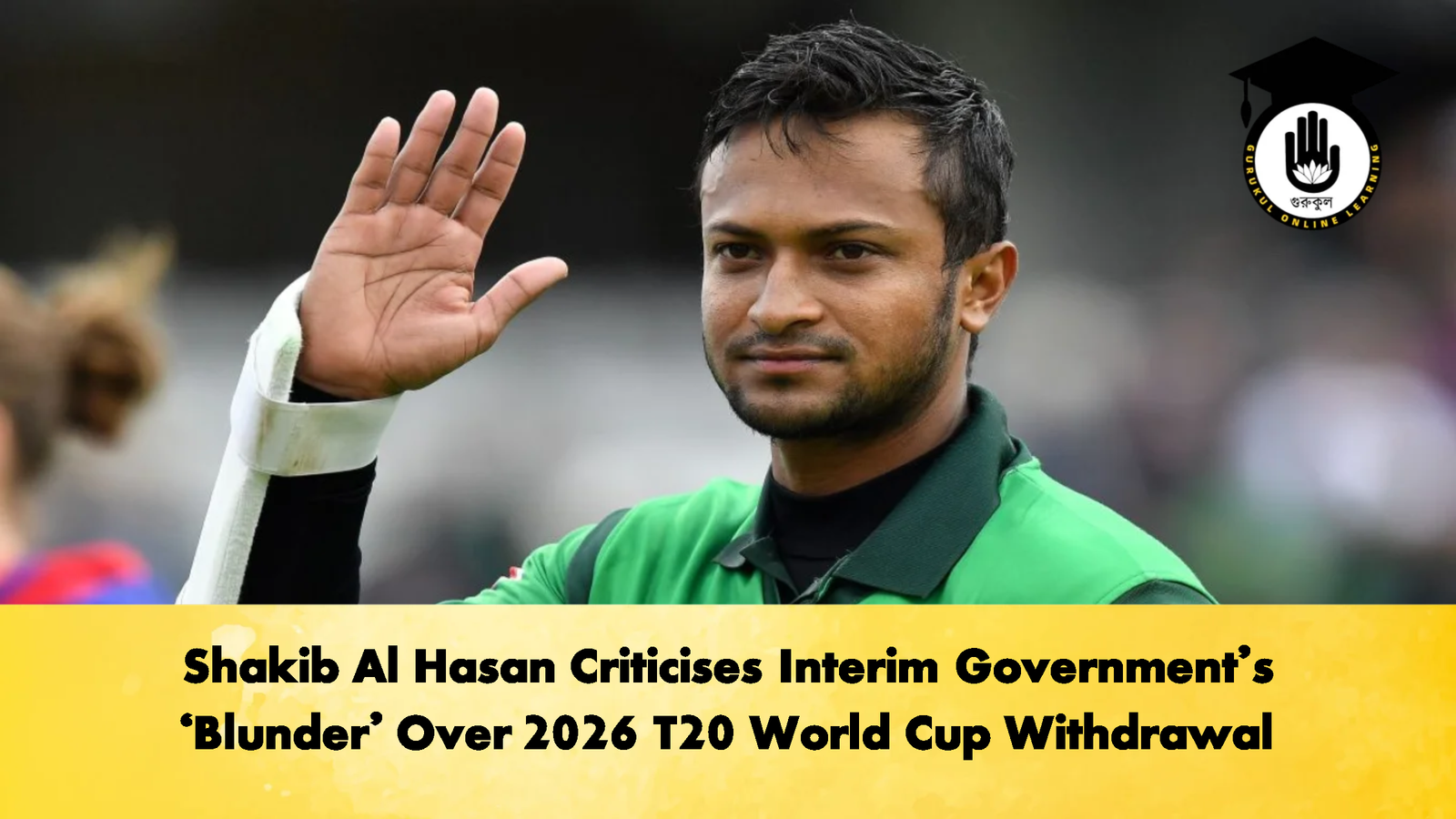
Shakib Al Hasan, the veteran all-rounder and former captain of the Bangladesh national cricket team, has issued a stern critique regarding the nation’s controversial absence from the 2026 ICC Men’s T20 World Cup. Speaking at a promotional event in Mumbai on 29 April 2026, Shakib characterised the decision by the then-interim government to withdraw from the global tournament as a “blunder” of significant proportions. He noted that the absence has caused profound damage to the country’s sporting prestige and the professional morale of its players.
The Origins of the Dispute and Mustafizur Rahman
The decision for Bangladesh to abstain from the 2026 edition of the T20 World Cup followed a period of heightening friction between the interim administration and international cricketing bodies. The roots of this contention trace back to a specific dispute in December 2025 concerning Mustafizur Rahman and his involvement in the Indian Premier League (IPL).
Mustafizur had been signed by the Kolkata Knight Riders (KKR) for a record 82.5 million BDT (approx. £600,000), making him the most expensive Bangladeshi player in IPL history. However, following a directive from the Board of Control for Cricket in India (BCCI) amid escalating bilateral tensions, KKR was forced to release the pacer before the season commenced. This incident served as a catalyst, hardening the interim government’s position. In January 2026, the Bangladesh Cricket Board (BCB) formally requested that the ICC relocate their World Cup fixtures from India to neutral venues in Sri Lanka, citing security concerns.
Geopolitical Narratives and ICC Refusal
At the time the decision was enacted, the interim government maintained that the withdrawal was a necessary measure to protect national pride and ensure the security of the delegation. Official statements suggested that the move was a strategic response to a delicate “geopolitical and diplomatic” environment.
However, the International Cricket Council (ICC) rejected the BCB’s request for a venue change, stating that independent security assessments found no “credible or verifiable security threat” to the Bangladesh team in India. Following a 24-hour ultimatum issued by the ICC on 23 January 2026, the Bangladesh government declined to permit the team to travel. Consequently, Bangladesh was officially replaced in Group C by Scotland, the highest-ranked side that had previously failed to qualify. This marked the first time in history that a T20 World Cup was held without Bangladesh’s participation.
Shakib Al Hasan’s Reflections on the ‘Blunder’
In his latest remarks, Shakib Al Hasan did not temper his disappointment, aligning his views with a disillusioned fan base. He highlighted that playing in a World Cup is the ultimate ambition for any cricketer, particularly when the team is performing with high levels of synergy.
“This is a massive loss,” Shakib remarked. “The entire nation loves to see their team in the World Cup. Bangladesh not playing in the World Cup is a ‘big miss’. It was a monumental blunder from the government’s side that they took the decision not to participate.”
Shakib’s comments reflect the internal devastation felt by the players who were denied the opportunity to represent their country. He further noted that the T20 squad had been in commendable form prior to the withdrawal, making the missed opportunity even more regrettable for a generation of cricketers.
Long-term Consequences for Bangladeshi Cricket
The impact of missing the 2026 T20 World Cup—which was eventually won by India in a final against New Zealand on 8 March 2026—extends far beyond a single tournament cycle. The repercussions are evident in several key areas:
Commercial and Financial Loss: By withdrawing, the BCB forfeited substantial revenue shares from the ICC, sponsorship opportunities, and global broadcasting exposure.
Ranking and Qualification: Missing a major event negatively impacts the team’s global standing, potentially complicating the qualification process for future international cycles.
Developmental Setback: The decision has had a demoralising effect on the domestic cricket structure, with emerging talents fearing that their professional careers remain vulnerable to political interference.
Shakib Al Hasan, who is currently an Awami League Member of Parliament and has not returned to Bangladesh since the ouster of the Sheikh Hasina-led government due to safety concerns, expressed hope that bilateral ties with India could be repaired through future series. Nevertheless, the 2026 withdrawal remains a “lost chapter” in the nation’s sporting history, viewed by stakeholders as a definitive setback caused by administrative conflict.