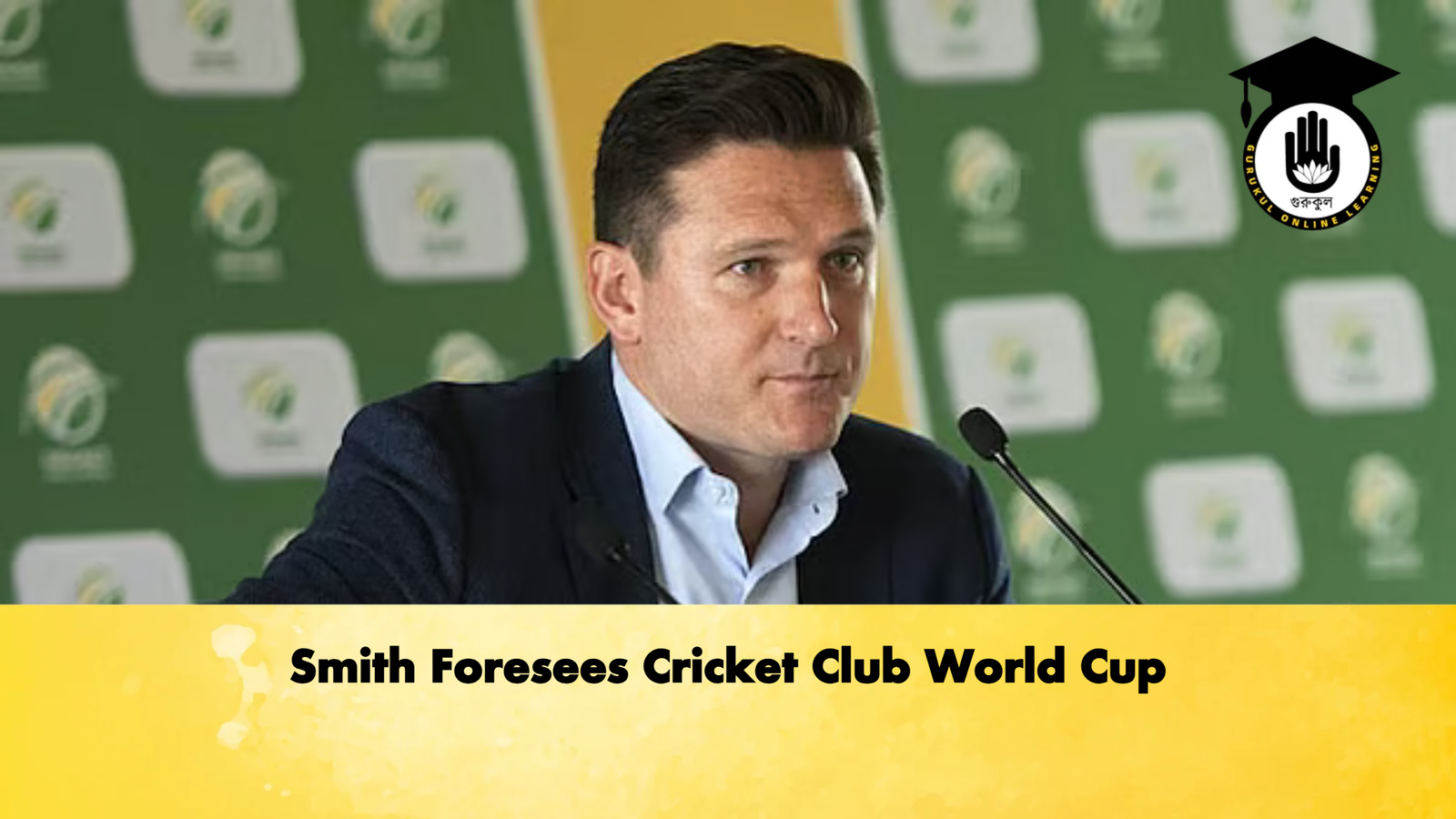
Former South Africa captain Graeme Smith has said that the Indian Premier League (IPL) has become the central force in the evolution of modern cricket, with franchise leagues around the world drawing inspiration from its model. He also believes there is scope for the creation of a cricket “Club World Cup” featuring champions from leading domestic T20 competitions.
Smith, who holds the record for captaining South Africa in the most Test matches and victories, is currently serving as the commissioner of the SA20 league. Speaking to Olympics.com, he reflected on the impact of franchise cricket and the return of cricket to the Olympic Games in 2028.
Since its launch in 2008, the IPL has transformed the global presentation of cricket. According to Smith, it has redefined how large a league can become commercially, how fans engage with the sport, and how playing standards are elevated. He noted that subsequent leagues have adopted structural and operational elements inspired by the IPL model.
Smith also highlighted that leagues in South Africa, England, and Australia have been influenced by the IPL’s auction system and overall structure. He expects that, in the future, global cricket will be shaped around four to five premier franchise leagues, each allocated a specific window in the international calendar, with the IPL positioned at the top of this hierarchy.
Concept of a Club World Cup
Smith suggested that cricket could follow football’s example by introducing a Club World Cup-style competition. He proposed that champions from major franchise leagues such as the IPL, SA20, and Australia’s Big Bash League could compete against each other.
He stated that such a tournament would be a natural progression for the sport and could enhance the global appeal of T20 cricket. However, he also acknowledged that significant planning and coordination would be required before such a concept could be implemented.
He emphasised that the current structure of privately owned franchise teams already provides a foundation for such an international competition. According to Smith, franchise cricket has created an entirely new ecosystem within the sport.
Key Franchise Leagues Referenced
| League | Country/Region | Format |
|---|---|---|
| Indian Premier League (IPL) | India | T20 |
| SA20 | South Africa | T20 |
| Big Bash League (BBL) | Australia | T20 |
| The Hundred | England | Short-format franchise |
Smith further stated that the growing popularity of franchise cricket is driven by increasing television audiences and rising private investment. He believes this trend will continue to shape the structure of the game globally.
He added that the IPL sits at the top of the current cricketing pyramid, attracting many of the world’s leading players and generating significant global attention. While other leagues can also succeed, he stressed the importance of scheduling coordination so that competitions complement rather than conflict with each other.
Olympic Return of Cricket
Smith also described cricket’s inclusion in the 2028 Los Angeles Olympic Games as a significant milestone. Cricket last appeared in the Olympics in 1900 and will return after a gap of more than a century.
The 2028 Games will feature T20 cricket for both men and women, with six teams in each category. The competition is scheduled to take place from 12 to 29 July at the Fairplex venue in Los Angeles.
Smith noted that many cricketers grow up aspiring to play in events such as World Cups and the IPL, but the Olympic Games offer a different level of prestige in global sport. He pointed to the emotional significance of Olympic success in other disciplines as an example of its importance.
He concluded that the opportunity to compete for an Olympic medal could provide a new dimension to cricket and offer an additional ambition for future generations of players.