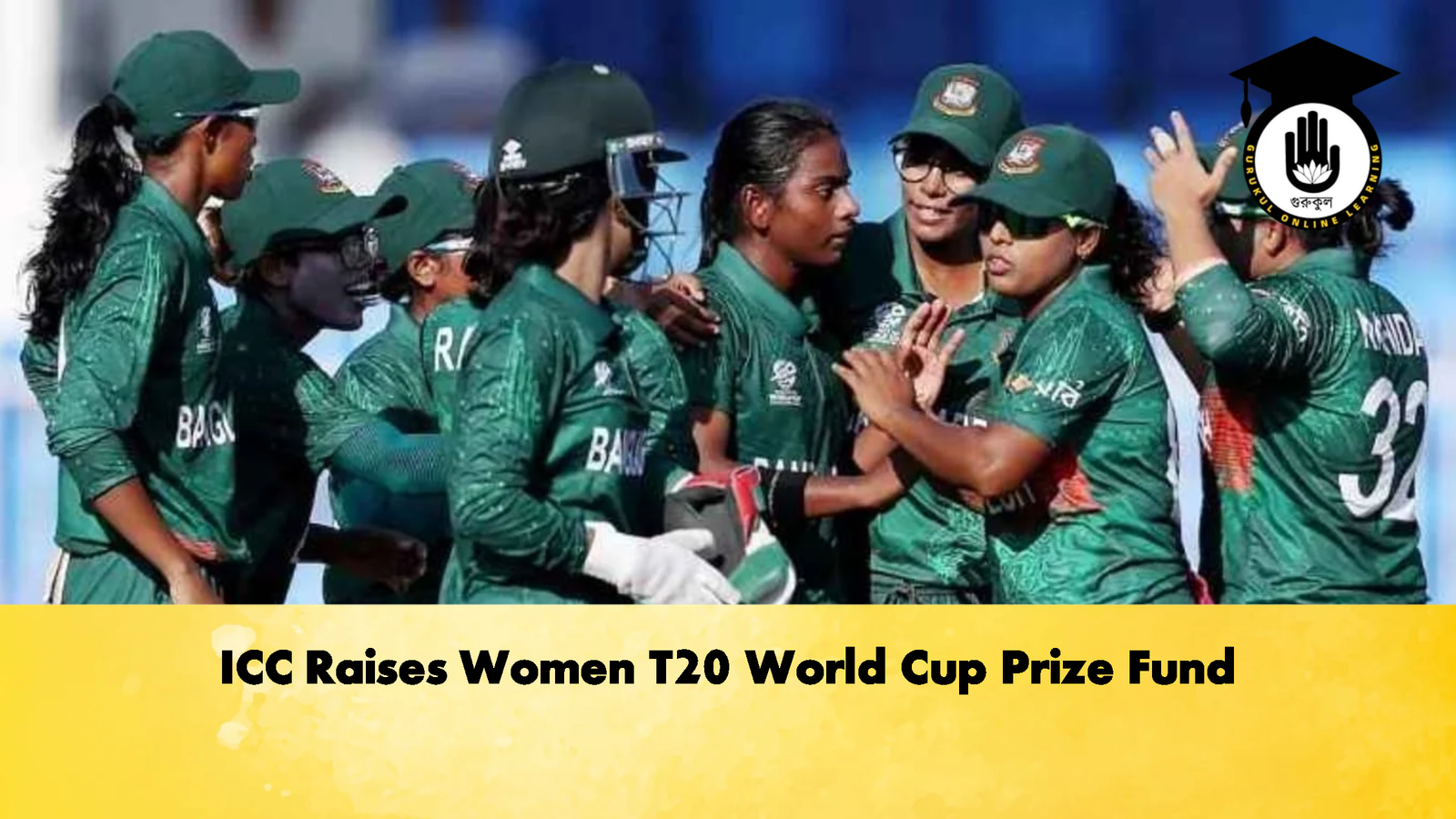
The International Cricket Council (International Cricket Council) has announced a 10% increase in the overall prize pool for the upcoming ICC Women’s T20 World Cup, scheduled to begin on 16 June in England. The total fund now stands at $8.764 million (approximately £7 million or around 1,078 crore taka), reflecting the governing body’s continued commitment to expanding investment and commercial growth in women’s cricket.
The announcement comes ahead of the tournament’s opening phase by around two months, underlining early administrative planning and the ICC’s intent to reinforce the financial structure of the women’s game. The Women’s T20 World Cup remains one of the premier events in the women’s cricket calendar, both in sporting prestige and financial reward.
Stable Top Prizes Despite Overall Increase
Although the total prize pool has increased, the prize money allocated to the finalists remains unchanged from previous editions. The champions of the tournament will again receive $2.34 million (approximately 28.78 crore taka), while the runners-up will take home $1.17 million (around 14.39 crore taka).
These figures continue to represent some of the highest prize awards in women’s sport, reinforcing the tournament’s growing commercial profile. However, the decision to hold the top-end rewards steady suggests a strategic balance between expanding overall distribution and maintaining stability at the elite level.
Expanded Format Enhances Competition
A key feature of this edition is the expansion of participating teams from 10 to 12, marking a significant structural shift. This change is expected to widen global representation, strengthen competitive balance, and provide greater exposure for emerging cricketing nations on the world stage.
The expansion also increases the number of fixtures, offering more opportunities for associate and developing teams to compete against established cricketing nations. Organisers believe this will contribute to the long-term growth and globalisation of the women’s game.
The previous edition of the tournament carried a total prize fund of $7.985 million, meaning this year’s increase represents a meaningful step forward in financial investment.
Prize Distribution Breakdown
| Stage / Achievement | Prize Money (USD) | Approx. Taka |
|---|---|---|
| Champions | $2.34 million | ~28.78 crore |
| Runners-up | $1.17 million | ~14.39 crore |
| Semi-finalists (each) | $675,000 | ~8.3 crore |
| Participation (each team) | $247,500 | ~3.04 crore |
| Group-stage win (per match) | $31,154 | — |
| Total Prize Pool | $8.764 million | ~107.8 crore |
Guaranteed Earnings and Incentives
All 12 participating teams are guaranteed a minimum payout of $247,500 (approximately 3.04 crore taka), ensuring that even teams eliminated at the group stage receive substantial financial returns. This baseline structure is designed to support developing cricket boards and encourage broader participation in elite tournaments.
In addition, each group-stage victory carries a bonus of $31,154, providing further incentive for competitive performances throughout the preliminary phase. The two losing semi-finalists will each receive $675,000, maintaining continuity with previous editions and ensuring meaningful rewards for teams reaching the final four.
Strategic Growth of Women’s Cricket
The ICC’s decision to increase the overall prize fund is part of a broader strategy to elevate the profile, professionalism, and commercial viability of women’s cricket. Over the past decade, the women’s game has seen significant progress, driven by improved broadcast deals, increased sponsorship, and expanded global tournaments.
At the same time, the unchanged prize allocation for finalists reflects a cautious approach, ensuring financial sustainability while widening the distribution of earnings across participating nations. This model prioritises both elite excellence and developmental support, particularly for lower-ranked teams.
Outlook for the Tournament
As preparations intensify, attention will shift towards squad announcements, warm-up fixtures, and final tactical adjustments. The expanded 12-team format, combined with enhanced financial incentives, is expected to make this one of the most competitive editions of the Women’s T20 World Cup to date.
For emerging cricket nations, the guaranteed participation fee alone represents a significant financial boost, strengthening domestic cricket structures and development pathways. For established sides, the increased prize pool raises the stakes further, ensuring heightened competition from the group stage through to the final.
Overall, the tournament is set to reflect the continuing evolution of women’s cricket into a more commercially robust and globally inclusive sporting spectacle.