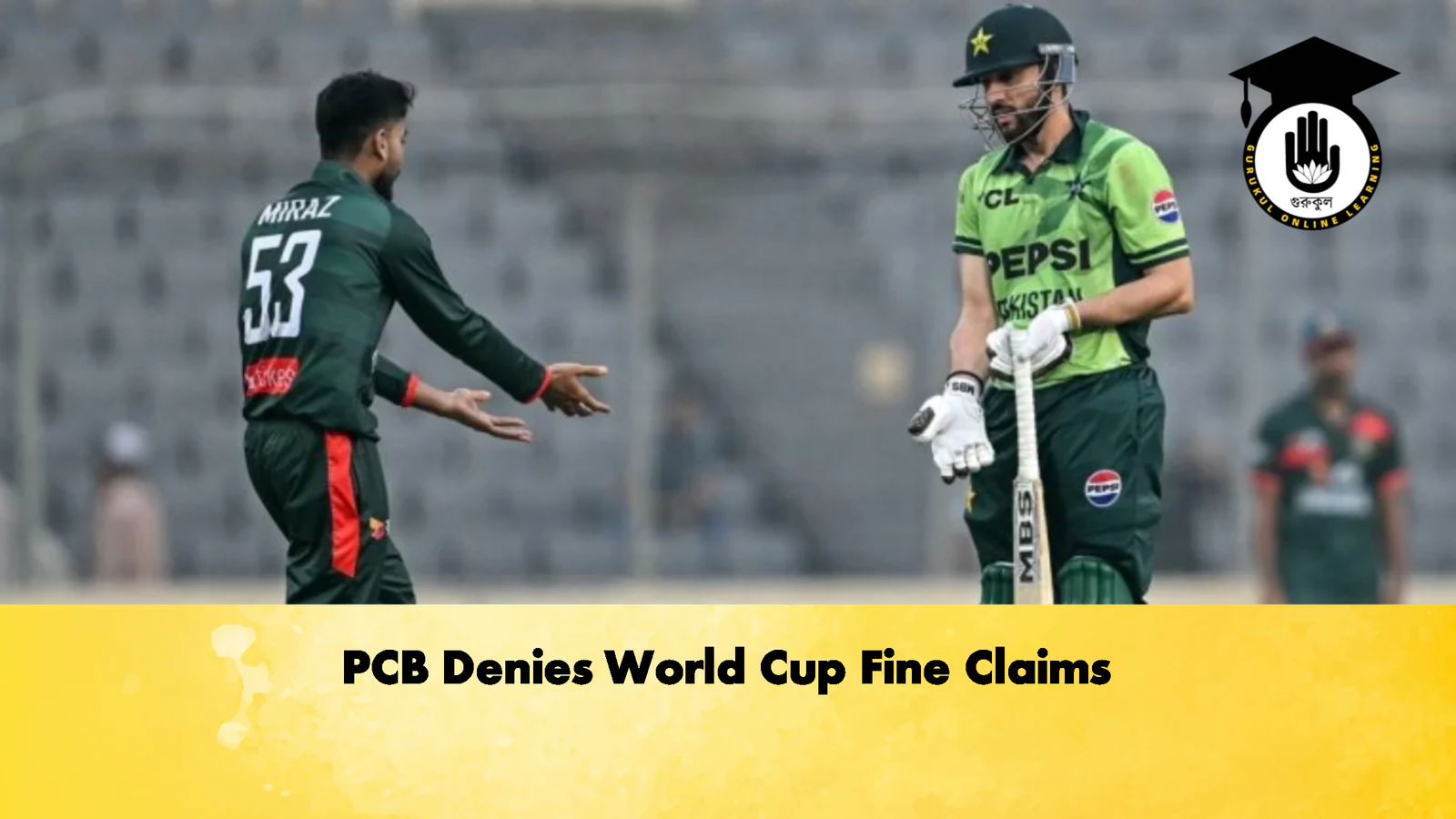
The Pakistan Cricket Board (PCB) has firmly rejected reports suggesting that players from Pakistan’s national cricket team would be subjected to heavy financial penalties following their disappointing performance in the ICC Men’s T20 World Cup. Board officials say the widely circulated claims are entirely unfounded and originated from rumours spreading on social media before being picked up by sections of the media.
The speculation began after a report by the Pakistani newspaper The Express Tribune claimed that the PCB had decided to impose a fine of 5 million Pakistani rupees—approximately USD 18,000—on each member of the national squad. The report suggested the proposed penalty was intended as a disciplinary response to the team’s underwhelming results during the global tournament.
However, PCB authorities moved quickly to refute the allegation. Speaking to journalists, the board’s head of media, Amir Mir, described the report as entirely baseless and insisted that no such decision had ever been discussed or approved by the cricket board.
“The PCB has never taken any such decision,” Mir said. “This matter is nothing more than speculation circulating on social media. There is no precedent for such fines, nor is there any regulation within the PCB framework that allows penalties of this nature to be imposed on players.”
He further urged journalists and supporters to verify information through official PCB channels before sharing or publishing reports that could harm the reputation of players and the board.
Pakistan’s Mixed Tournament Performance
Pakistan entered the tournament with high expectations but struggled to maintain consistency throughout the competition. The team, captained by Salman Ali Agha, played six matches but ultimately failed to secure a place in the semi-finals.
During the group stage, Pakistan began their campaign with wins against the Netherlands national cricket team and the Namibia national cricket team, raising hopes of a strong run in the tournament. However, a crucial defeat to the India national cricket team significantly complicated their chances of progressing comfortably to the knockout stages.
The Super Eight phase proved even more challenging. Pakistan’s match against the New Zealand national cricket team was abandoned due to rain, costing them a valuable opportunity to secure additional points. The situation worsened when they suffered a defeat to the England national cricket team, placing them on the verge of elimination.
Although Pakistan ended their campaign with a victory over the Sri Lanka national cricket team, the margin of that win was insufficient to significantly improve their net run rate. As a result, the team was eliminated before reaching the semi-final stage of the tournament.
Pakistan’s World Cup Results
| Stage | Opponent | Result | Impact |
|---|---|---|---|
| Group Stage | Netherlands | Win | Strong opening to campaign |
| Group Stage | Namibia | Win | Maintained qualification momentum |
| Group Stage | India | Loss | Major setback in group standings |
| Super Eight | New Zealand | No Result (Rain) | Missed opportunity for points |
| Super Eight | England | Loss | Left team close to elimination |
| Super Eight | Sri Lanka | Win | Victory insufficient for semi-final qualification |
Growing Pressure After Early Exit
Pakistan’s early exit from the tournament has drawn considerable criticism from fans and cricket analysts. The national side has historically been regarded as one of the most unpredictable yet dangerous teams in the shortest format of the game, making their failure to reach the knockout rounds particularly disappointing for supporters.
Amid this frustration, rumours about potential financial penalties quickly spread online. Nevertheless, the PCB has reiterated that such punitive measures have never been under consideration.
Instead, board officials are expected to undertake a comprehensive review of the team’s performance, examining preparation, strategy and squad composition ahead of future international tournaments in an effort to restore Pakistan’s competitiveness on the global stage.