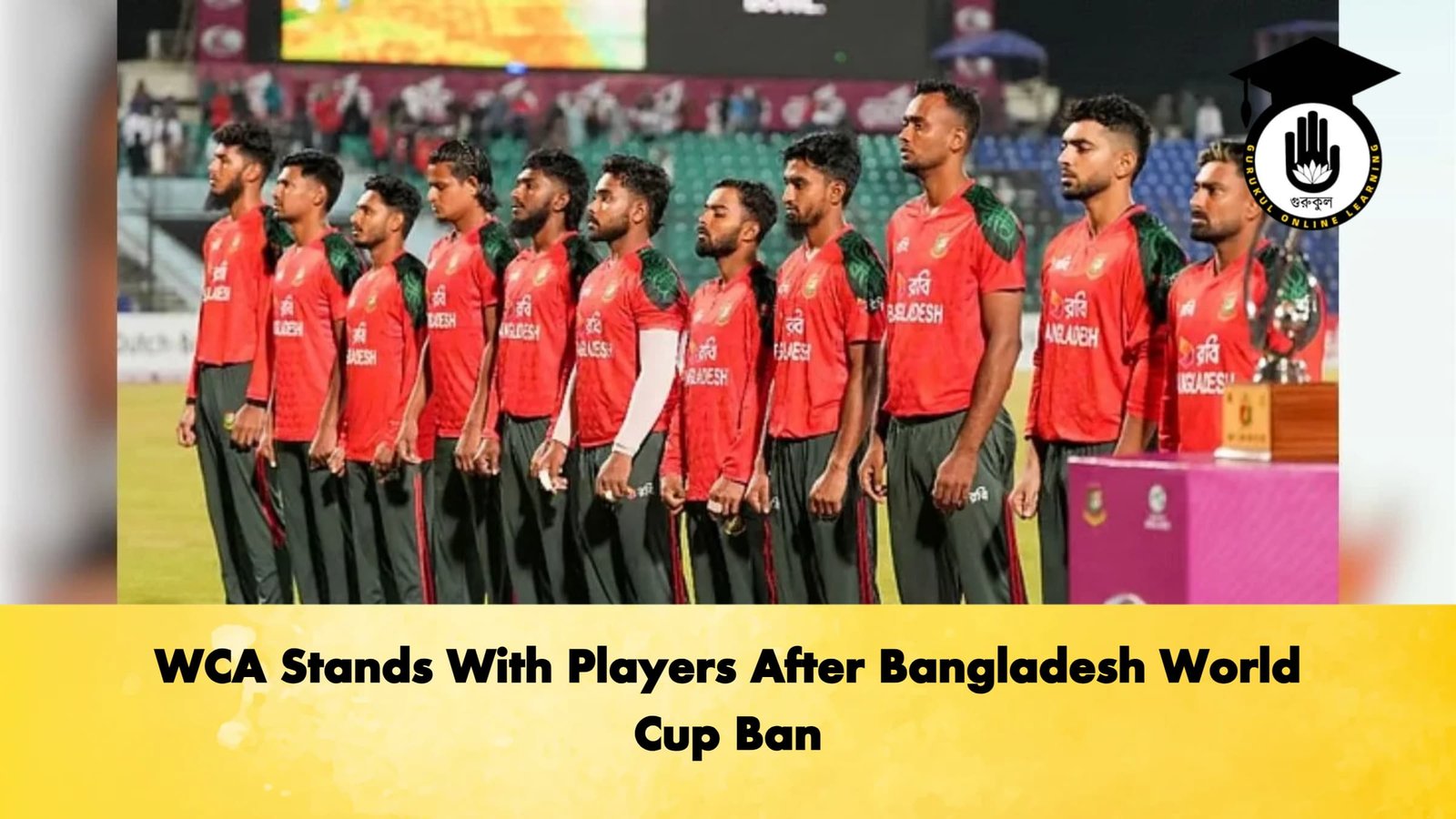
The World Cricketers’ Association (WCA) has issued a poignant warning regarding the structural integrity of international sport following Bangladesh’s confirmed absence from the 2026 T20 World Cup. The International Cricket Council (ICC) finalised the omission on Saturday, officially installing Scotland as the replacement side after the Bangladesh Cricket Board (BCB) declined to tour the host nation, India.
A “Sorrowful Moment” for the Fraternity
In a statement that balanced diplomacy with a stern critique of current governance, WCA Chief Executive Tom Moffat described the exclusion of a major cricketing nation as a “sorrowful moment” for the global game. The WCA, which represents professional players worldwide, argued that the sport’s prestige is fundamentally diminished when a competitive side and its massive fanbase are sidelined.
“Cricket is at its strongest when every team and every player is respected and provided with the opportunity to compete on fair terms,” Moffat noted. He emphasised that the success of a global tournament relies on the participation and contribution of all major nations, and the current impasse suggests a failure to uphold these core values.
WCA Analysis: Risks to the Global Game
| Crisis Factor | Description of the Concern |
| Governance Fragility | Inability of the ICC and Member Boards to resolve diplomatic disputes. |
| Player Rights | A growing disregard for contracts and the voices of professional athletes. |
| Sporting Exclusion | The precedent of a major nation being replaced by an associate member. |
| Trust Deficit | Erosion of unity between governing bodies and player representatives. |
| Future Viability | Risks of a permanent “weakening” of the international cricket structure. |
Systemic Failures and “Worrying Trends”
The WCA’s concern extends far beyond the immediate boycott, pointing to a broader malaise in how international cricket is managed. The association highlighted several “worrying trends” that have surfaced recently, including:
Contractual Neglect: A perceived lack of respect for professional agreements.
Poor Communication: The absence of meaningful consultation with players and their representatives.
Institutional Indifference: A general disregard for the human element of the sport.
Moffat warned that if these underlying issues are not addressed, the “trust and unity” required for a healthy international circuit will evaporate. The statement suggested that the current governing structure is struggling to manage the complex intersection of politics and professional sports.
A Call for Introspection and Support
The WCA has urged the ICC and national leaders to treat this crisis as an opportunity for “introspection.” Rather than pursuing paths of division or exclusion, the association called for a unified approach to ensure the long-term health of the sport.
Concluding the address, the WCA reaffirmed its unwavering solidarity with the Cricketers’ Welfare Association of Bangladesh (CWAB). The organisation pledged to remain a vocal advocate for the Bangladeshi players who have been stripped of the chance to compete on the world stage, vowing to work toward a future where “fairness and inclusivity” are once again the sport’s guiding principles.