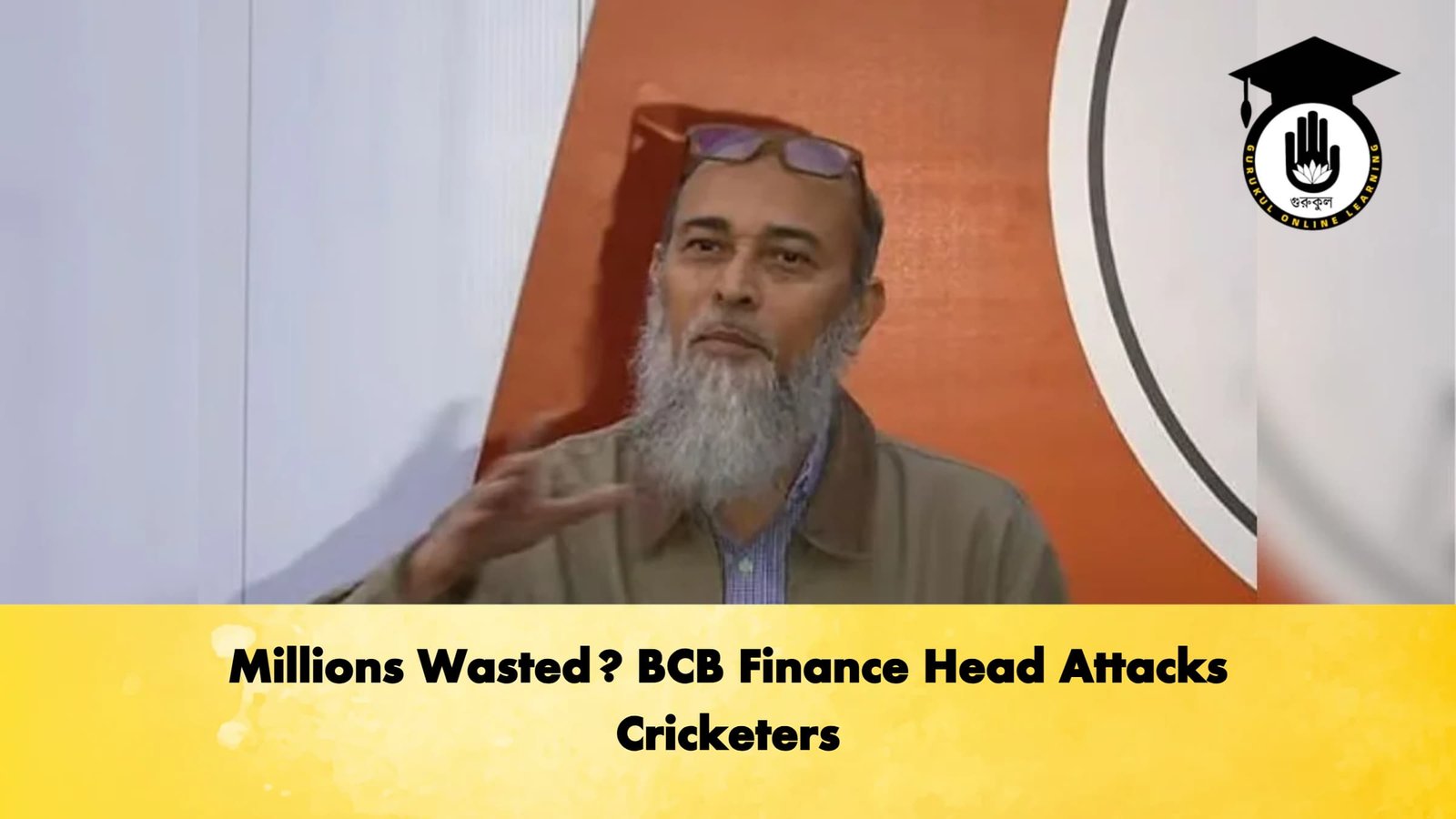
The prospect of Bangladesh’s participation in the upcoming T20 World Cup remains an enigma, as the Bangladesh Cricket Board (BCB) and the national government maintain a firm refusal to compete on Indian soil. While the cricketing world awaits a final verdict from the International Cricket Council (ICC) regarding a potential venue change, the BCB has moved to address the financial ramifications of a boycott. In a series of candid remarks, the board’s financial leadership has made it clear that while the institution is fiscally insulated, the players should expect no financial safety net.
The Financial Fortification of the Board
M. Nazmul Islam, Chairman of the BCB Finance Committee, has sought to reassure stakeholders that a withdrawal from the tournament would not result in a deficit for the board. His assessment reveals a robust revenue stream provided by the ICC that remains detached from tournament-specific outcomes. The BCB effectively operates on a guaranteed income model that ensures stability regardless of whether the team takes to the field in 2025.
| Financial Indicator | Detail | Value (USD) |
| ICC Annual Revenue | Yearly payout to BCB | $20.4 Million |
| Preparation Grant | Already credited to BCB | $500,000 |
| Reserve Distribution | Periodic bonus (every 4 years) | $4 Million |
| Missed Player Revenue | Prize money from last T20 WC | $720,000 |
A Scathing Critique of “Return on Investment”
The narrative took a sharp turn when the discussion shifted to the welfare of the cricketers. A boycott would deprive players of match fees and substantial prize money—funds that go directly to the athletes rather than the board. When asked if the BCB would consider subsidising these losses, Islam delivered a blunt rebuttal, questioning the team’s value for money.
“We are spending millions on these cricketers,” Islam remarked, pointedly highlighting the lack of silverware in the trophy cabinet. “When they perform poorly, do we ask for that money back? We could argue that for every failed global campaign, they should reimburse the board for the vast sums spent on their travel, training, and salaries.”
The “Body and Limb” Philosophy
Islam further elaborated on the relationship between the board and its players using a biological metaphor. He argued that the board serves as the “body” while the players are the “limbs.” While acknowledging they are “part and parcel” of the same entity, his comments suggested that the board’s institutional survival takes precedence over the financial interests of individual athletes.
This stance has ignited a fierce debate regarding the ethics of sports management. While the board’s decision to prioritise security and national sovereignty is widely supported, the public “reproaching” of players for their historical performance—while simultaneously profiting from their participation in the sport—has been viewed by many as a step too far in administrative rhetoric.